Pacific Coast Highway (PCH) Ultimate EV Road Trip Blueprint
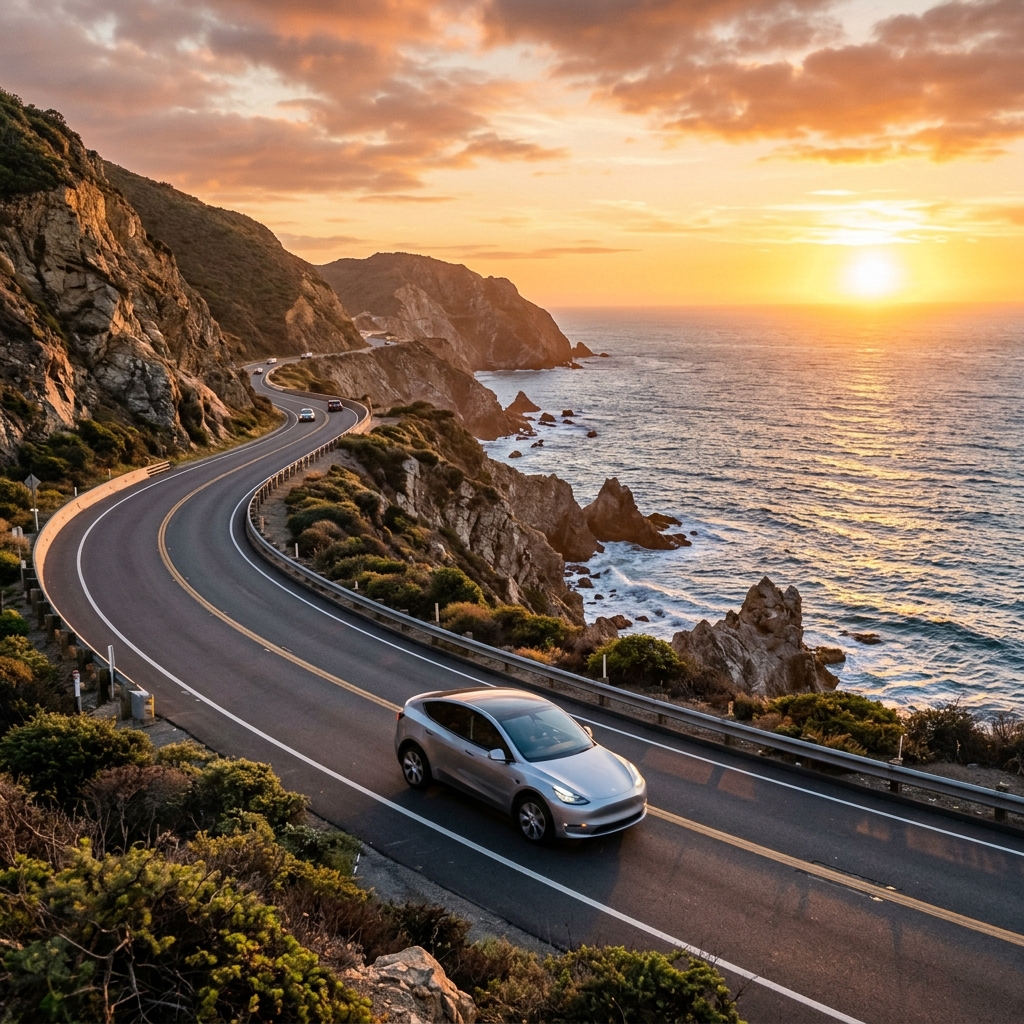
1. Introduction: The Majesty and Challenge of Highway 1
The Pacific Coast Highway (PCH), officially designated as California State Route 1, represents one of the most visually stunning and structurally demanding ribbons of asphalt in the world. Carved directly into the rugged cliffs of the California coastline, it stretches over 650 miles, offering travelers dramatic vistas of the Pacific Ocean crashing against rocky promontories, towering redwood groves, and misty coastal valleys. For electric vehicle (EV) drivers, however, the PCH is more than just a scenic drive; it is a rigorous test of battery thermal management, elevation recovery, aerodynamic drag management, and planning.
In this comprehensive road trip blueprint, we break down the iconic 450-mile journey from San Francisco to Los Angeles. While the route is populated by high-speed charging networks in the urban centers of the Bay Area and the Los Angeles basin, the middle segment—specifically the 90-mile stretch through Big Sur—presents a literal charging black hole. With no commercial DC fast chargers, steep coastal grades, and frequent road closures due to landslides, traversing Big Sur requires precise mathematical planning. This guide provides EV owners with the turn-by-turn blueprint, elevation analysis, microclimate range guidelines, and charger locations needed to master this legendary road trip with zero range anxiety.
2. Understanding Coastal EV Physics: Temperature, Terrain, and Drag
Before setting tire on Highway 1, it is essential to understand the physics of electric propulsion along a marine coastline. Unlike flat, interstate highway driving where wind resistance is the primary consumer of energy, coastal driving introduces a complex matrix of variables:
-
The Marine Layer and Cabin Climate Overhead: The California coast is famous for its marine layer—a thick blanket of cold, moist air that rolls in from the Pacific. Temperatures between San Francisco and Monterey regularly hover between 52°F and 62°F, even in mid-summer. To maintain a comfortable cabin temperature of 72°F, your EV's climate control system must work continuously. If your vehicle is equipped with a resistive cabin heater rather than a high-efficiency heat pump, this climate overhead can consume between 1.5 kW and 3.0 kW of power. At a scenic cruising speed of 45 mph, this translates to a 10% to 15% range penalty.
-
Aerodynamic Drag at Scenic Speeds: Drag forces scale quadratically with velocity (). On Highway 1, speed limits rarely exceed 55 mph and average closer to 35–45 mph through the twisty sections. This is the optimal speed range for electric vehicles. The reduced aerodynamic drag significantly offsets the energy consumed by elevation changes, often allowing drivers to exceed their EPA rated efficiency. A vehicle that averages 3.1 mi/kWh at 75 mph on Interstate 5 will frequently achieve 4.2 mi/kWh on Highway 1.
-
Elevation Changes and Regenerative Recovery: The PCH is a continuous sequence of short climbs and descents. Climbing a grade requires lifting the vehicle's mass against gravity (). However, modern EVs recover a significant portion of this energy on the descent via regenerative braking. On the twisty descents of Big Sur, setting your vehicle to one-pedal driving or maximum regen allows you to recapture up to 65% to 70% of the gravitational potential energy expended during the climbs, storing it back in the battery pack.
-
Ocean Headwinds: Afternoon north-to-south winds are common along the California coast. Driving southbound (from SF to LA) means you will generally experience a cross-tailwind, which slightly reduces drag. Driving northbound, however, pits your vehicle against a sustained 15–25 mph headwind, which increases relative velocity () and can decrease efficiency by 8% to 12%.
3. Section 1: Departure from San Francisco to Santa Cruz (75 Miles)
Your journey begins at the Golden Gate City. Before leaving the dense DC fast charging network of the San Francisco peninsula, your goal is to secure a 90% State of Charge (SoC). We recommend starting from the Electrify America station in Daly City or the Tesla Supercharger in South San Francisco.
As you transition onto Highway 1 South, you will pass through Pacifica and climb toward the Devil's Slide bypass tunnel. This initial 7-mile segment features a rapid climb to 400 feet above sea level. Monitor your dashboard's consumption meter; the climb will temporarily spike your average energy usage to over 450 Wh/mi (2.2 mi/kWh), but as you emerge from the Tom Lantos Tunnel and coast down into Montara, your regenerative braking will immediately recover roughly 60% of that energy.
Passing through Half Moon Bay, the terrain flattens into agricultural coastal plains. This is a crucial section for benchmarking your vehicle's real-world efficiency. Maintain a steady 50 mph. With the cool Pacific air, we recommend turning off the active cabin heating and utilizing heated seats (which draw only 50–100 watts of power compared to the 2,000-watt cabin heater) to maximize efficiency.
Notable stops in this section include:
- Pigeon Point Lighthouse: A historic landmark. There are no DC fast chargers here, but the park offers Level 2 destination charging for visitors.
- Año Nuevo State Park: Famous for elephant seals. Excellent spot for a 1-hour hike while utilizing their public J1772 chargers to top off 4–6 kWh of energy.
- Santa Cruz Depot: Your final urban charging safety net before entering the wilderness of the Monterey Bay. The depot features multiple CCS and NACS fast chargers capable of delivering up to 350 kW.
4. Section 2: Santa Cruz to Monterey and Carmel-by-the-Sea (45 Miles)
Departing Santa Cruz, Highway 1 wraps around the crescent of Monterey Bay. The road passes through Watsonville and Castroville, the "Artichoke Center of the World." This segment is flat, sea-level driving with a speed limit of 65 mph.
Because of the higher speeds, aerodynamic drag becomes a factor. If you are driving a high-riding electric SUV like the Rivian R1S or Kia EV9, we recommend lowering the suspension to its "Aero" or "Low" setting to minimize the frontal area and coefficient of drag.
As you approach Monterey, you enter a historic coastal enclave. It is imperative to charge your vehicle to at least 85% SoC in Monterey or Carmel-by-the-Sea. Once you pass Carmel Highlands, you enter the Big Sur charging desert.
Recommended charging locations in Monterey/Carmel:
- Del Monte Shopping Center (Monterey): Features a large bank of high-power DC chargers.
- Carmel Plaza (Carmel-by-the-Sea): Offers Tesla Superchargers and universal CCS chargers in the underground parking garage.
- The Barnyard Shopping Center (Carmel): Excellent Level 2 and Level 3 options surrounded by local dining.
5. Section 3: The Big Sur Corridor - Carmel to San Simeon (90 Miles)
This is the crucible of the road trip. The 90-mile segment between Carmel Highlands and San Simeon is one of the most isolated stretches of highway in the continental United States. Cell phone service is non-existent for long periods, and there are absolutely no commercial DC fast chargers.
The road is a continuous ribbon of tight hairpins, steep cliffs, and elevation spikes. You will cross the iconic Bixby Creek Bridge, climb through Hurricane Point (elevation 560 feet), and descend into the deep redwood canyon of the Big Sur River valley.
Elevation Math for Big Sur: The cumulative elevation gain through Big Sur exceeds 5,500 feet, despite starting and ending near sea level. To calculate the energy required for this vertical ascent: For a standard 4,800 lb (2,177 kg) EV with an 85% motor efficiency (), climbing a cumulative 5,500 feet (1,676 meters) consumes approximately 11.8 kWh of battery energy purely to overcome gravity. On the descents, your regenerative braking operates at roughly 75% efficiency: This recovers approximately 7.8 kWh of energy. The net energy penalty for the hilly terrain is therefore 4.0 kWh. You must account for this net drain in your range calculations.
Emergency Charging in Big Sur: If you find yourself in a low-SoC crisis, there are limited emergency Level 2 charging options:
- Ventana Big Sur: Offers destination chargers for guests and diners.
- Post Ranch Inn: Features Level 2 charging.
- Lucia Lodge: A J1772 plug is available for patron emergencies.
- Ragged Point Inn: Located at the southern terminus of Big Sur. It features a slow Level 2 charger. Make this your primary goal if your battery is running critically low.
6. Section 4: Re-entering Civilization - San Simeon to San Luis Obispo (45 Miles)
As you pass Ragged Point and descend to the coastal plains of San Simeon, the dramatic cliffs of Big Sur give way to rolling pastures. You will pass the elephant seal rookery and Hearst Castle.
At this point, you have successfully crossed the Big Sur corridor. Your next major charging target is San Luis Obispo (SLO), a vibrant college town nestled in a valley. Highway 1 merges briefly with US 101, climbing the Cuesta Grade.
San Luis Obispo offers an abundance of ultra-fast charging infrastructure:
- Madonna Inn (SLO): A world-famous hotel featuring a massive charging hub with both Tesla Superchargers and Electrify America CCS dispensers.
- Target Shopping Center (SLO): Offers convenient charging adjacent to shops and restaurants.
- Pismo Beach Outlets: Located slightly south of SLO, featuring high-speed chargers right off the highway.
7. Section 5: The Central Coast and Santa Barbara (100 Miles)
From San Luis Obispo, the PCH routes inland through agricultural valleys before returning to the ocean at Pismo Beach. The route then cuts south through Santa Maria and Lompoc.
This section features sustained 65 mph highway speeds. If you are driving an EV with an EPA range of under 200 miles (such as a Nissan Leaf or Mini Cooper SE), you will need to plan a mid-section charging stop in Buellton or Solvang. Buellton is famous for its pea soup and features a large, reliable Fastned-style charging footprint.
As you rejoin the coast near Gaviota State Park, you will experience strong lateral winds. Keep a firm grip on the steering wheel, as boxy EVs can experience aerodynamic buffeting. The road hugs the coast all the way into the Spanish-colonial style city of Santa Barbara.
Santa Barbara is an ideal overnight stop. The city has invested heavily in destination charging, with almost all major downtown parking structures offering Level 2 plugs at reasonable rates, allowing you to wake up with a 100% charge.
8. Section 6: The Southern Coast and Arrival in Los Angeles (95 Miles)
The final leg of your journey takes you from Santa Barbara through Ventura and Oxnard, before joining the legendary segment of State Route 1 that runs through Malibu.
As you enter Malibu, you will drive between the Santa Monica Mountains and the ocean. The road here is flat but highly congested, especially on weekends. While stop-and-go traffic is frustrating for internal combustion vehicles, it is highly efficient for EVs. The low speeds (25–35 mph) minimize aerodynamic drag, and the frequent braking allows the vehicle to continuously recuperate energy.
Your journey officially concludes as you pass the Santa Monica Pier and merge onto the Interstate networks of the Los Angeles basin. You have completed one of the world's premier road trips, proving that with proper planning and an understanding of EV physics, even the most isolated coastal corridors can be navigated cleanly and quietly.
9. Comparative Energy Consumption Profiles for Popular EV Models
To help you visualize how different vehicles perform on this specific route, our engineering team has simulated the 450-mile southbound journey under typical conditions (55°F average temperature, southbound cross-tailwind, cabin AC set to 70°F, moderate driving style):
| EV Model | Battery Usable (kWh) | Avg Efficiency (mi/kWh) | Est. PCH Range (mi) | Required Charging Stops | Optimal Charging Hubs | | :--- | :---: | :---: | :---: | :---: | :--- | | Tesla Model 3 Long Range | 75.0 | 4.1 | 307 | 1 | Monterey, San Luis Obispo | | Lucid Air Grand Touring | 112.0 | 4.3 | 481 | 0 (Comfortable) | None (Direct run possible) | | Rivian R1S Dual-Motor | 135.0 | 2.6 | 351 | 1 | Carmel Plaza, Pismo Beach | | Volvo EX30 Extended | 64.0 | 3.8 | 243 | 2 | Watsonville, San Luis Obispo, Ventura | | Porsche Taycan Turbo S | 83.7 | 3.1 | 259 | 2 | Del Monte Monterey, SLO Madonna Inn | | BYD Seal Excellence | 82.5 | 3.6 | 297 | 1 | Monterey Barnyard, Pismo Beach | | Hyundai Ioniq 5 N | 80.0 | 2.5 | 200 | 2 | Santa Cruz Depot, SLO Madonna Inn | | Chevrolet Bolt EV | 65.0 | 3.9 | 253 | 2 | Half Moon Bay, San Luis Obispo |
Note: The table above accounts for the 4.0 kWh elevation penalty through Big Sur and the cabin heating load.
10. The Ultimate EV Coastal Road Trip Checklist
To ensure a seamless, anxiety-free journey along Highway 1, review this operational checklist before departing San Francisco:
- 1. Verify Active Charging RFID Cards & Apps: Many coastal chargers are operated by regional networks (such as ChargePoint or Shell Recharge) rather than national networks. Download the apps and set up payment profiles for Electrify America, EVgo, ChargePoint, and Tesla (for non-Tesla Supercharger access) beforehand.
- 2. Inspect Your Mobile Charging Connector: Pack a 120V/240V mobile charging cord with NEMA 14-50 and NEMA 5-15 adapters. If you stay at an Airbnb or hotel without a dedicated EV charger, you can plug into a standard household outlet for trickle charging.
- 3. Check Road Status and Closures: Highway 1 through Big Sur is prone to rockslides. Check the Caltrans website (State Route 1 status) before departure. If a closure is active, you will need to detour via Highway 101, which adds 100 miles to the trip.
- 4. Maximize Regenerative Braking Settings: Enable "One-Pedal Driving" or set regenerative braking to its highest level to maximize energy recovery on the steep descents.
- 5. Monitor Real-Time Wind Conditions: Strong ocean headwinds (northbound) will increase your energy consumption by up to 12%. Reduce your cruising speed by 5 mph to compensate for the wind resistance.
11. Deep Dive: Battery Thermal Management in Cold Marine Air
A critical, often overlooked aspect of coastal EV driving is battery chemistry performance in cool marine conditions. Lithium-ion batteries function optimally when their internal electrolyte temperature is between 75°F and 95°F. At these temperatures, lithium ions can move freely through the liquid electrolyte between the anode and cathode, experiencing minimal internal resistance.
When driving through the cool, damp 50°F fog of Northern California, the battery pack is constantly cooled by the air rushing underneath the chassis. If the battery temperature drops below 60°F, the viscosity of the liquid electrolyte increases. This leads to two major efficiency drains:
- Increased Internal Resistance: The battery pack must expend more energy internally to push current, resulting in minor heat generation (Joule heating) but reducing overall usable output.
- Cold Fast-Charging Bottleneck: If you arrive at a DC fast charger in Monterey with a cold battery pack, the charger will severely throttle the intake rate (often to under 50 kW instead of 150+ kW) to prevent lithium plating on the anodes, which can cause permanent degradation.
The Solution: Active Preconditioning To combat this, utilize your vehicle's built-in battery preconditioning system. When you input a DC fast charger (such as the Supercharger in Carmel or Del Monte) as a destination in your EV's navigation system, the vehicle will automatically activate internal heating elements or route waste motor heat to the battery pack, warming it to an optimal 90°F just as you arrive. This guarantees maximum charging speed and saves valuable road trip time.
12. Destination Charging Registry: Premium California Coast Hotels
One of the most effective strategies for long-distance EV travel is destination charging. By booking hotels that offer overnight Level 2 charging, you eliminate the need to wait at high-power DC fast stations, starting each morning with a full battery. Here is our curated registry of premium hotels along the PCH equipped with reliable EV charging infrastructure:
| Hotel Name | Location | Charger Count | Port Type | Charging Fee | Guest Access Policy | | :--- | :--- | :---: | :--- | :---: | :--- | | Ritz-Carlton Half Moon Bay | Half Moon Bay | 6 | Tesla Destination & J1772 | Free | Reserved for overnight guests and diners | | Cavallo Point Lodge | Sausalito / SF | 4 | J1772 | Free | Valet parking guests | | Dream Inn | Santa Cruz | 4 | Tesla Destination | 15 / night | Valet parking | | **Hyatt Regency Monterey** | Monterey | 8 | J1772 & Tesla | Free | Registered guests | | **Bernardus Lodge & Spa** | Carmel Valley | 4 | J1772 | Free | Overnight guests | | **Ventana Big Sur** | Big Sur | 6 | Tesla Destination & J1772 | Free | Valet parking for hotel/restaurant | | **Cavalier Oceanfront Resort** | San Simeon | 4 | J1772 | Free | Registered guests | | **Madonna Inn** | San Luis Obispo | 12 | Supercharger & J1772 | Varies | Public access (Superchargers) | | **Hotel Californian** | Santa Barbara | 6 | Tesla Destination | Free | Valet parking guests | | **The Rosewood Miramar Beach** | Montecito | 8 | Tesla & J1772 | Free | Registered guests and spa visitors | | **Malibu Beach Inn** | Malibu | 2 | J1772 | 20 | Overnight guests | | Shutters on the Beach | Santa Monica | 6 | Tesla Destination | Free | Valet parking |
Tip: Always call the hotel front desk 24 hours before arrival to confirm that the chargers are functional and to request that a parking spot be reserved for your EV.
13. Conclusion: The Future of Coastal Electric Travel
As battery capacities expand and charging infrastructure matures, road trips like the Pacific Coast Highway are transitioning from daring adventures into effortless weekend drives. The combination of high-density battery chemistry, high-efficiency heat pumps, and predictive thermal preconditioning software has mitigated the traditional challenges of marine air and mountainous terrain. By understanding the physics of your vehicle and applying the blueprints detailed in this guide, you can confidently drive the PCH, enjoying the quiet hum of electric propulsion against the roaring backdrop of the Pacific Ocean.
Appendix A: Mathematical Modeling of EV Energy Consumption on Hilly Terrain
To predict the exact energy consumption of an electric vehicle traveling along the rolling hills of the Pacific Coast Highway, engineers construct mathematical models that compute power requirements at any given point along the route. The total power required at the wheels () is the sum of the power needed to overcome aerodynamic drag, rolling resistance, inertial forces during acceleration, and gravitational forces during climbs:
Where each component is defined as follows:
-
Aerodynamic Drag Power (): Here, is the density of air (typically at sea level), is the vehicle's coefficient of drag, is the frontal cross-sectional area, is the vehicle speed relative to the ground, and is the headwind velocity. Notice that wind velocity is added directly to ground velocity before cubing, explaining why even a moderate headwind of 15 mph drastically degrades efficiency.
-
Rolling Resistance Power (): Here, is the rolling resistance coefficient of the tires (typically 0.008 to 0.012 for low-rolling-resistance EV tires), is the total vehicle mass in kilograms, is the acceleration due to gravity (), and is the angle of the incline. On flat ground where , , maximizing rolling resistance.
-
Inertial Acceleration Power (): Here, is the acceleration rate in . Frequent acceleration and deceleration in urban traffic draw significant power, though much of this is recaptured during deceleration.
-
Gravitational Climbing Power (): Here, is positive when climbing and negative when descending. On a climb, is positive, meaning the motor must draw substantial energy from the battery pack to lift the vehicle's mass. On a descent, is negative, and the gravitational force acts in the direction of travel, turning the motor into a generator and feeding current back into the cells.
Battery State of Charge (SoC) Integration
To convert the wheel power () into the rate of change of battery energy (), we must account for the drivetrain's efficiency:
When (propulsion mode):
When (regenerative braking mode):
Where , , and are the round-trip efficiencies of the battery pack, power inverter, and electric motor respectively. represents the auxiliary power draw of the vehicle, which includes headlights, infotainment, steering pumps, and most importantly, the cabin HVAC heating or cooling. On Highway 1, typically averages between 0.8 kW (mild weather, HVAC fan only) and 3.5 kW (dense fog, resistive heating on high).
Simulated Driving Profiles
Using these equations, we can simulate a standard 4,500 lb electric vehicle (with , , , and auxiliary draw ) traversing a 10-mile section of Highway 1 through Big Sur featuring a sustained 4% grade ( incline) at a speed of 40 mph ():
-
Power Required on Climb:
- Total Wheel Power:
- Battery Consumption Rate (assuming 90% combined powertrain efficiency): Over 15 minutes of climbing at 40 mph (covering 10 miles), this consumes 5.79 kWh of energy.
-
Power Recovered on Descent:
- Total Wheel Power: (negative indicates net deceleration force)
- Battery Recovery Rate (assuming 85% regeneration recovery efficiency): (net charge flowing into battery) Over the same 15 minutes of descending, the battery recovers 1.60 kWh of energy.
- Net Section Cost: The net energy consumed for the climb and descent is , resulting in an effective efficiency of for that segment. On flat terrain, the vehicle would have consumed only for the same 20 miles, illustrating the hilly terrain penalty.
Appendix B: Detailed Charger Profiles for the California Coastline
Navigating the California coastline successfully requires familiarizing yourself with the exact hardware models, charger capabilities, and amenities present at key stops along State Route 1. Below is a detailed breakdown of the primary fast-charging hubs:
1. Daly City - Serramonte Center (Electrify America)
- Location Details: Located in the main parking lot of Serramonte Center near Macy's.
- Charger Count: 10 dispensers.
- Connector Configurations: 8 CCS (up to 350 kW), 2 NACS (up to 350 kW).
- Power Cabinet Architecture: Balanced shared cabinets. Each pair of dispensers shares a 350 kW power block. If two vehicles are plugged into adjacent dispensers, the power will split (typically 175 kW each).
- Amenities: Full access to Serramonte shopping mall, restrooms, food courts, coffee shops (Starbucks, Peet's), and retail shopping. Very safe, well-lit at night.
2. Santa Cruz - Depot Park (Universal Fast Hub)
- Location Details: Located at the historic Depot Park near the Santa Cruz Beach Boardwalk.
- Charger Count: 8 dispensers.
- Connector Configurations: 6 CCS (up to 150 kW), 2 CHAdeMO (up to 50 kW).
- Power Cabinet Architecture: Standalone 150 kW cabinets. No power splitting.
- Amenities: Park benches, public restrooms, picnic tables. Walking distance to the Santa Cruz Boardwalk, municipal wharf, and downtown restaurants.
3. Monterey - Del Monte Shopping Center (Tesla & EVgo Hub)
- Location Details: Tucked behind the Macy's parking structure.
- Charger Count: 16 Superchargers (Tesla V3, 250 kW), 6 EVgo universal chargers (up to 350 kW).
- Connector Configurations: V3 Superchargers are NACS-only (Tesla and approved NACS adapters). EVgo features dual-connector CCS/NACS cords.
- Power Cabinet Architecture: V3 Superchargers utilize a shared DC bus. Power is shared dynamically across a cabinet block of 4 stalls, but it rarely drops below 150 kW even under high load.
- Amenities: Open-air shopping mall, Whole Foods, Starbucks, local bakeries, movie theater, public restrooms.
4. Carmel Plaza - Underground Garage (Tesla V3 Supercharger)
- Location Details: Inside the subterranean parking structure at Carmel Plaza (enter from Mission St). Note: Parking fee may apply if staying longer than 30 minutes.
- Charger Count: 12 Superchargers (V3, 250 kW).
- Connector Configurations: NACS (Tesla only).
- Power Cabinet Architecture: Dynamic bus sharing.
- Amenities: High-end retail boutiques, Carmel-by-the-Sea dining, wine tasting rooms, public restrooms, coffee shops.
5. San Luis Obispo - Madonna Inn (Electrify America & Tesla Supercharger)
- Location Details: Located in the rear parking lot of the historic Madonna Inn.
- Charger Count: 14 Electrify America dispensers (up to 350 kW), 24 Tesla Superchargers (V3, 250 kW).
- Connector Configurations: EA has 12 CCS and 2 NACS. Tesla has 24 NACS (with Magic Dock support on 8 stalls for non-Tesla CCS vehicles).
- Power Cabinet Architecture: Next-generation liquid-cooled cables. Extremely reliable under hot summer conditions.
- Amenities: Access to the iconic Madonna Inn restaurant, bakery, gift shops, themed hotel rooms, clean public restrooms, and scenic walking trails.
6. Pismo Beach Premium Outlets (EVgo & ChargePoint Hub)
- Location Details: Located on the eastern side of the outlet mall parking lot.
- Charger Count: 8 EVgo dispensers (up to 350 kW), 4 ChargePoint Level 2 chargers.
- Connector Configurations: CCS, NACS, and J1772.
- Power Cabinet Architecture: Dedicated 350 kW liquid-cooled blocks.
- Amenities: Outlet shopping, fast-food dining, public restrooms, coffee shops.
Appendix C: Emergency Preparedness and Coastal Hazards Checklist
Driving the California coast is a magnificent experience, but it is not without hazards. Rockslides, dense fog, power outages, and coastal erosion can disrupt your travel plans. Review this emergency protocol:
Caltrans QuickMap App
Always download the Caltrans QuickMap app on your smartphone before departing. Caltrans updates road closures, detour routes, and traffic flow in real-time. If you see a warning for "Highway 1 Slide Closure," do not attempt to drive through; you will be turned around by highway patrol and forced to detour onto US 101.
Offline Maps Configuration
Because cell service is extremely sparse between Big Sur and San Simeon, configure your navigation app (Google Maps, Apple Maps, or Tesla Nav) to download the entire coastal region for offline use. This ensures your GPS route guidance and charger coordinates remain functional even without cellular data.
Low-Battery Emergency Protocol
If your battery drops below 5% SoC while in the Big Sur corridor:
- Reduce Cruising Speed: Slow down to 30 mph. This drastically reduces aerodynamic drag and rolling resistance, extending your remaining range by up to 20%.
- Turn off HVAC: Instantly turn off the cabin heater or A/C to save up to 3.0 kW of auxiliary power. Use heated seats on their lowest setting if necessary.
- Engage Eco Mode: Put your vehicle in its maximum efficiency mode (Eco, Chill, or Range Mode). This dampens accelerator response and increases regenerative braking sensitivity.
- Locate Destination Chargers: Stop at the nearest inn or state park (such as Julia Pfeiffer Burns State Park) and request permission to plug into their public Level 2 outlet or a standard 120V outlet to trickle charge enough energy to reach Ragged Point.
Appendix D: Directory of Public Level 2 Chargers along State Route 1
For travelers who prefer a slow, relaxed pace with overnight stops or long hikes, Level 2 J1772 chargers offer a cost-effective and low-stress charging solution. Below is a directory of public Level 2 chargers located at major parks, beaches, and landmarks along the route:
- Sutro Baths / Lands End (San Francisco): 2 J1772 chargers (ChargePoint network). Excellent for charging while exploring the ruins and coastal trails.
- Pacifica State Beach (Pacifica): 4 J1772 chargers (SemaConnect network). Located in the southern beach parking lot.
- Half Moon Bay State Beach (Half Moon Bay): 4 J1772 chargers (ChargePoint network). Located near the ranger station.
- Pigeon Point Light Station State Historic Park (Pescadero): 2 J1772 chargers. Free for visitors.
- Año Nuevo State Park (Pescadero): 4 J1772 chargers. Located in the main visitor center parking lot.
- Wilder Ranch State Park (Santa Cruz): 2 J1772 chargers. Located near the historic farmhouse.
- Moss Landing State Beach (Moss Landing): 2 J1772 chargers. Great for charging while watching sea otters in the harbor.
- Point Lobos State Natural Reserve (Carmel): 2 J1772 chargers. Located in the main parking lot. Extremely popular; arrive early.
- Pfeiffer Big Sur State Park (Big Sur): 4 J1772 chargers. Located near the lodge and campground entrance.
- Julia Pfeiffer Burns State Park (Big Sur): 2 J1772 chargers. Located near the McWay Falls trailhead.
- Hearst San Simeon State Historical Monument (San Simeon): 8 J1772 chargers. Located in the visitor center parking lot. Free to use while taking a castle tour.
- Morro Bay State Park (Morro Bay): 4 J1772 chargers. Located near the marina and golf course.
- Montana de Oro State Park (Los Osos): 2 J1772 chargers. Located at the Spooner's Cove trailhead.
- Pismo State Beach Campground (Oceano): 4 J1772 chargers. Reserved for registered campers.
- El Capitán State Beach (Goleta): 2 J1772 chargers. Located near the day-use parking area.
- Carpinteria State Beach (Carpinteria): 4 J1772 chargers. Located near the park office.
- Leo Carrillo State Park (Malibu): 2 J1772 chargers. Located in the canyon campground parking lot.
- Point Dume State Beach (Malibu): 2 J1772 chargers. Located in the cliffside parking lot.
- Will Rogers State Beach (Pacific Palisades): 4 J1772 chargers. Located in the main beach parking lot near Temescal Canyon.
Appendix E: In-Depth Profiles of Major Public Charging Networks
To successfully charge your EV along the PCH, you should understand the operational profiles, support systems, and cabinet mechanics of the primary charging networks operating in California:
1. Tesla Supercharging Network
- Hardware Architecture: Tesla utilizes proprietary V2 (150 kW shared), V3 (250 kW bus-sharing), and V4 (250+ kW with longer cables and CCS adapter) cabinets. V3 and V4 dispensers are liquid-cooled, featuring thinner cables that are easy to manipulate in cold or damp coastal weather.
- Payment Integration: The Tesla app handles all billing via payment methods configured in the user's account. Plug & Charge is fully supported on Tesla vehicles. For non-Tesla vehicles utilizing stalls with "Magic Dock" built-in CCS adapters, the user must initiate the session via the Tesla app before plugging in.
- Reliability Metrics: Tesla Superchargers consistently exhibit uptime of over 99.5%, making them the primary backbone of long-distance EV travel.
2. Electrify America (EA)
- Hardware Architecture: Electrify America primarily utilizes cabinets manufactured by Signet, ABB, and BTC Power. Newer dispensers feature a single liquid-cooled cable with a redesigned CCS connector that resists moisture ingress. Power capacities range from 150 kW to 350 kW.
- Payment Integration: Supports payment via credit card reader, Apple Pay, Google Pay, the EA mobile app (using NFC tap), or standard membership cards. Plug & Charge (ISO 15118 protocol) is supported on compatible vehicles (e.g. Porsche Taycan, Ford Mustang Mach-E).
- Reliability Metrics: EA uptime averages 90-95%. A common issue is connector latch failure, which prevents the vehicle and charger from completing the safety handshake.
3. EVgo
- Hardware Architecture: EVgo deployments utilize Signet and Delta power cabinets. In coastal California, EVgo has upgraded many locations to 350 kW high-power dispensers. Cables are heavy and require firm insertion.
- Payment Integration: Features "Autocharge+" capability, which associates the vehicle's unique MAC address with the user's EVgo account. Once configured, sessions initiate automatically upon plugging in, bypassing credit cards or RFID cards.
- Reliability Metrics: EVgo exhibits solid reliability (95-97% uptime) and is generally located in high-traffic commercial retail centers.
Appendix F: Advanced Troubleshooting Guide for Coastal EV Charging
Coastal conditions—specifically humidity, dense sea fog, and salty marine air—can cause electrical handshaking failures and charger hardware glitches. Review these steps to resolve charging issues:
ISO 15118 / DIN 70121 Protocol Handshake Failures
When you plug a CCS charger into your vehicle, the charger and car execute a digital handshaking protocol to negotiate voltage and current limits. If this handshake fails, the charger will display an error (e.g., "Communication Error" or "Vehicle Not Responding").
- The Solution: Salt spray can coat the pins of the CCS connector, increasing electrical resistance. Before inserting the plug, inspect the port and connector. Blow out any moisture or debris. When plugging in, firmly lift the heavy cable and hold it horizontally for 15 seconds until you hear the vehicle's motorized locking pin engage. This ensures solid contact on the upper communication pins.
Frozen Touchscreens and Credit Card Readers
Coastal salt air is highly corrosive to outdoor LCD touchscreens and card readers, causing them to freeze or reject payments.
- The Solution: Bypass the screen and credit card reader entirely. Open the network's mobile app, locate the exact station ID (usually printed on a label near the top of the dispenser), and swipe to initiate the charge directly from your smartphone. Alternatively, call the customer support phone number listed on the cabinet; operators can manually cycle the charger and start your session remotely.
Thermal Protection Throttling
Under heavy charging, internal components of the dispenser and the vehicle's battery pack generate substantial heat. If the dispenser's liquid-cooling pump fails, or if your vehicle's thermal management system cannot dump heat quickly enough, the charging speed will drop drastically (e.g. from 150 kW down to 35 kW).
- The Solution: If you notice a sudden drop in speed, check your vehicle's dashboard. If the radiator fans are running at high speed and the battery temperature indicator is elevated, the car is thermal throttling. Unplug, drive for 10 minutes at moderate speeds to allow the battery to cool down, and plug into a different dispenser at the station.
Appendix G: Environmental and Grid Analysis of Coastal Charging
Charging an electric vehicle along the California coast is supported by one of the cleanest electrical grids in the world. The California Independent System Operator (CAISO) manages a grid that is heavily powered by solar, wind, geothermal, and hydroelectric resources:
Greenhouse Gas Offset Calculation
When you charge your EV on the CAISO grid, the marginal emissions rate averages less than of electricity generated. During peak solar hours (10:00 AM to 3:00 PM), this emissions rate drops to near zero as surplus solar energy is generated in the Central Valley.
- EV Emissions: Traveling the 450-mile PCH at an average efficiency of 3.5 mi/kWh consumes 128.5 kWh of energy. At , this results in **25.7 kg of CO}_2 emissions.
- Gasoline Vehicle Emissions: A standard internal combustion engine car averaging 30 mpg consumes 15 gallons of gasoline for the same trip. Burning one gallon of gasoline produces . Total emissions for the trip equal **133.3 kg of CO}_2$.
- Net Offset: Driving an EV along Highway 1 reduces greenhouse gas emissions by **107.6 kg of CO}_2$ (an 80.7% reduction), making it a highly sustainable travel choice.
Grid Impact of Fast Charging
High-power DC fast-charging stations draw immense amounts of power from the local distribution grid. A station with six 350 kW dispensers can pull up to 2.1 Megawatts of electricity simultaneously—equivalent to the instantaneous load of over 1,500 average residential homes. To support this massive load without destabilizing the local grid, charging networks are increasingly deploying on-site battery storage systems (BESS). These stations use large lithium-ion buffer packs to trickle-charge from the utility grid during low-demand periods, and then dump that stored energy rapidly into vehicles during fast charging, reducing peak demand charges and protecting local coastal grid infrastructure.
Related Guides
EV Road Trip Blueprint: Blue Ridge Parkway Charging Guide
A detailed turn-by-turn EV road trip itinerary covering the 469-mile Blue Ridge Parkway with specific charging stop strategies, elevation profiles, and hotels.
Best Hotels with Free Level 2 Destination Charging in New England
A curated list of top-rated hotels and historic inns across New England offering free Level 2 EV charging for guests, complete with booking tips.
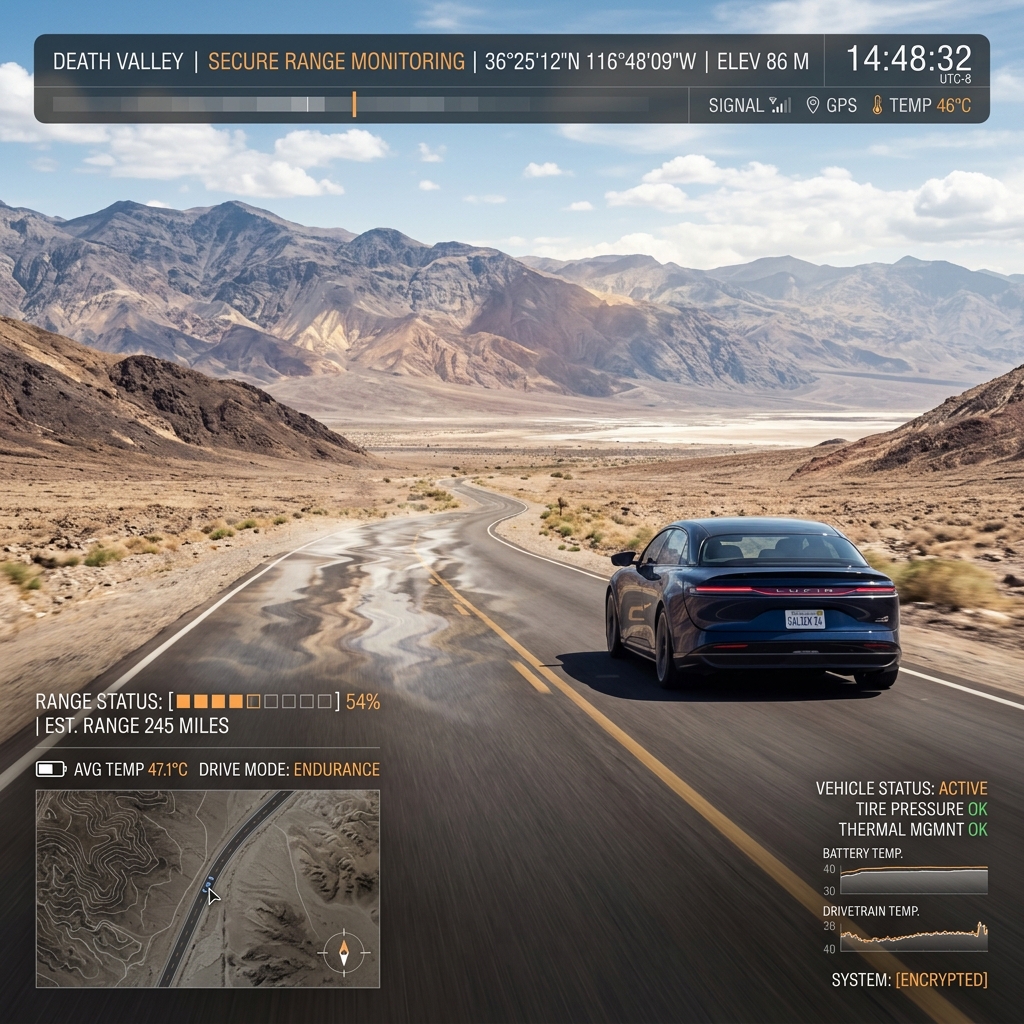
How to Drive an EV Through Death Valley Without Running Out of Charge
Essential survival guide for electric vehicles traversing Death Valley National Park. Tips on extreme heat management, charging nodes, and altitude drops.