How to Drive an EV Through Death Valley Without Running Out of Charge
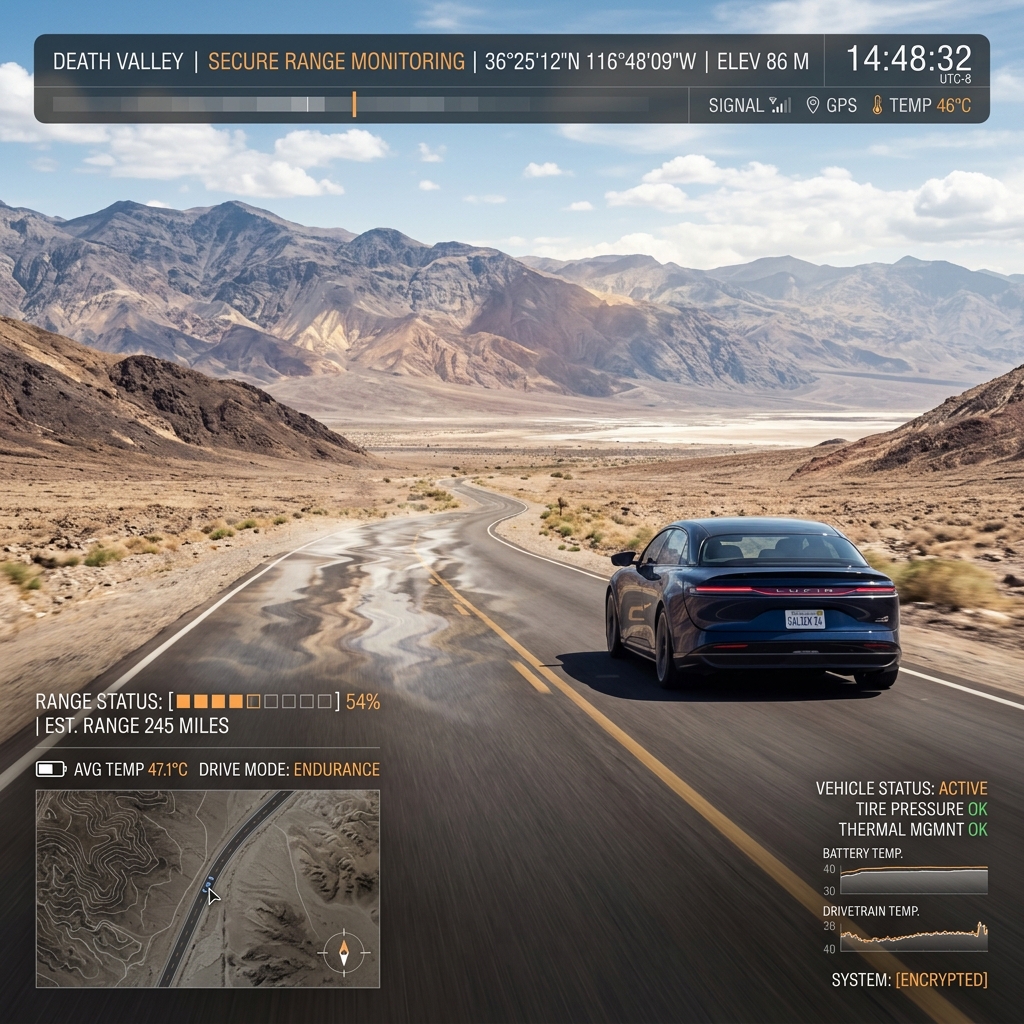
Death Valley National Park is a place of extremes. It is the hottest, driest, and lowest national park in the United States. Temperatures in the summer regularly exceed 120°F (49°C), and the landscape features massive elevation changes, dropping from high mountain passes to 282 feet below sea level at Badwater Basin.
For electric vehicle (EV) drivers, these conditions create a perfect storm of range-depleting factors. Driving through Death Valley is entirely possible and highly rewarding, but doing so safely requires a specialized strategy. This guide covers the critical 150-mile gap, battery management in extreme heat, and emergency backup options.
The Triple Threat: Heat, A/C, and Elevation
Traversing Death Valley exposes your EV to three distinct environmental pressures:
- Extreme Battery Temperatures: Lithium-ion battery packs operate most efficiently between 60°F and 95°F. When ambient temperatures hit 115°F+, your EV must divert significant energy to run its active thermal management system (liquid cooling loops) to prevent the battery from overheating. This cooling overhead runs continuously, even when the car is parked.
- Cabin Air Conditioning Load: To keep passengers safe in 120°F heat, the cabin A/C compressor must run at maximum capacity. Unlike heating, which is highly inefficient on resistive heaters, A/C compressors typically draw 1 kW to 3 kW of power. Over a slow, 5-hour drive through the park, this alone can consume 5% to 15% of your total battery capacity.
- Sustained Altitude Climbs: Entering or leaving the park from the west requires climbing over Townes Pass (elevation 4,956 feet) or Father Crowley Overlook. Climbing these steep grades requires immense power, quickly depleting your battery. Conversely, descending into the valley can generate substantial energy via regenerative braking, but only if you have room in your battery to store it.
Key Charging Gates: Where to Top Up Before Entry
There are no high-speed DC Fast Chargers (DCFC) inside the borders of Death Valley National Park. You must treat the surrounding towns as "gates" where you charge to high levels before entering the park.
- West Gate: Lone Pine, CA: Located along US-395, Lone Pine features a major 250 kW Tesla Supercharger and several Electrify America chargers. Strategy: Charge to at least 90% here if you plan to head east over the mountains into the park.
- East Gate: Beatty, NV: Located on the Nevada side, Beatty has a reliable 8-stall Tesla Supercharger and charge stations at local hotels. Strategy: Excellent entry point from the north/east.
- Southeast Gate: Pahrump, NV: A major town with multiple high-speed charging options. This is your last chance to get a fast charge if you are driving in from Las Vegas.
Inside the Park: Level 2 Oasis
While there are no DC Fast Chargers in the park, there are a few Level 2 destination chargers that can save your trip:
- The Oasis at Death Valley (Furnace Creek): This resort has multiple Level 2 J1772 chargers available for guests. Stopping here for lunch or an overnight stay is highly recommended to replenish your battery.
- Stovepipe Wells: Features a small number of public Level 2 chargers. It is a critical safety net if you find your battery draining faster than expected after climbing Townes Pass.
Emergency Plan: What If You Get Stranded?
If your state of charge drops dangerously low, take these immediate actions:
- Reduce Speed: Aerodynamic drag increases exponentially with speed. Slowing down from 65 mph to 50 mph can increase your range by 15% to 20%.
- Set A/C to Recirculate: Keep the cabin cooling system on, but set it to recirculate and increase the temperature target to 78°F. Do not turn the A/C completely off in summer, as extreme heat can lead to heat exhaustion.
- Utilize Coasting and Regen: On descents, let regenerative braking capture as much energy as possible. Do not ride the mechanical brakes.
Related Guides
Pacific Coast Highway (PCH) Ultimate EV Road Trip Blueprint
A comprehensive turn-by-turn EV road trip guide for California Highway 1 between San Francisco and Los Angeles. Includes Big Sur charger black holes, coastal elevation math, and optimal charging stops.
EV Road Trip Blueprint: Blue Ridge Parkway Charging Guide
A detailed turn-by-turn EV road trip itinerary covering the 469-mile Blue Ridge Parkway with specific charging stop strategies, elevation profiles, and hotels.
Best Hotels with Free Level 2 Destination Charging in New England
A curated list of top-rated hotels and historic inns across New England offering free Level 2 EV charging for guests, complete with booking tips.