EV Charging Etiquette & Hidden Idle Fees: What Every Driver Should Know
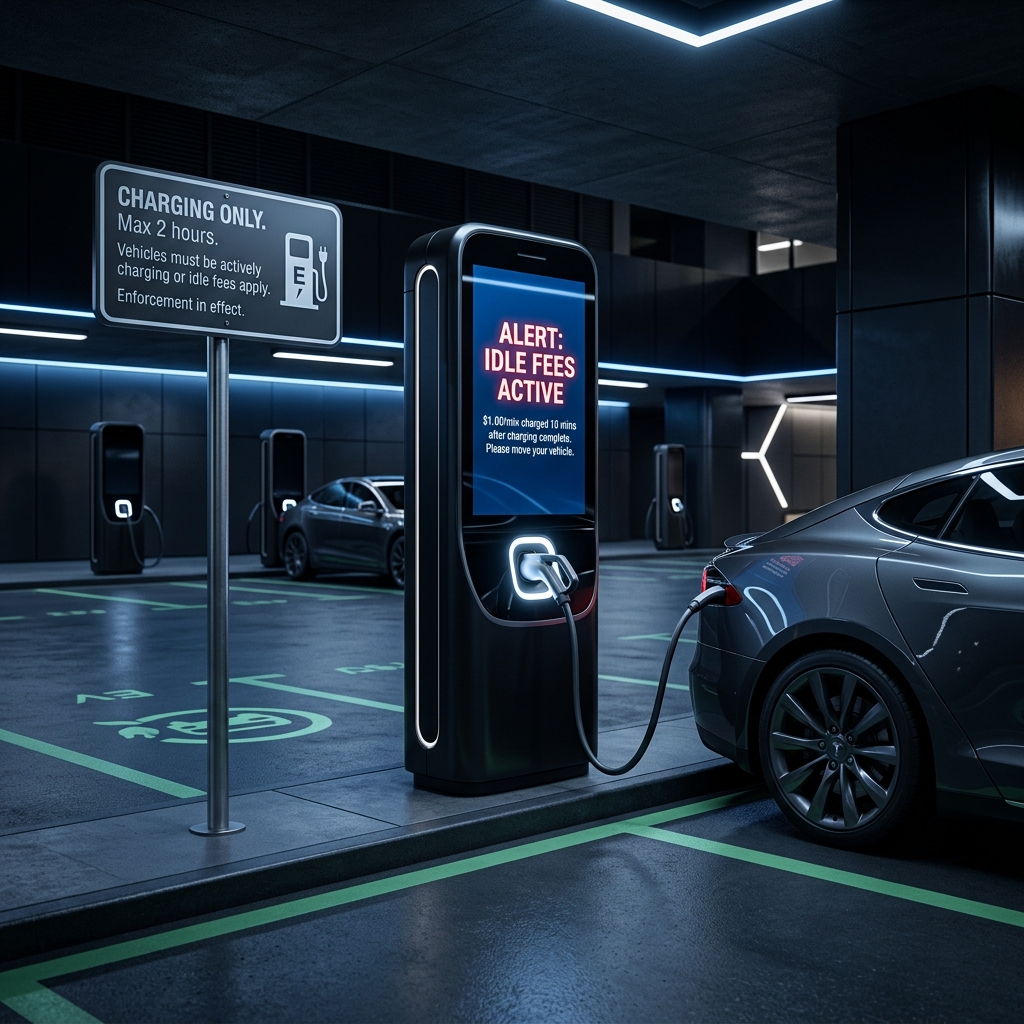
As millions of drivers switch from internal combustion engine (ICE) vehicles to electric vehicles (EVs), public charging infrastructure is coming under increased demand. Unlike gas stations, where refueling takes less than five minutes, charging an EV requires 20 to 60 minutes. This difference in dwell time makes proper charging etiquette and efficient stall rotation essential.
To discourage drivers from using active charging stalls as parking spaces, charging networks have introduced penalties known as idle fees. In this guide, we cover the exact idle fee rates across major networks, basic charging station rules, and the "80% courtesy rule."
What Are Idle Fees and How Do They Work?
An idle fee is a per-minute charge billed to your account if your EV remains plugged into a charger after the charging session has finished.
Typically, the charging network app will send you a push notification when your vehicle reaches 80% charge, and another when charging is complete. Most networks grant a brief grace period (usually 5 to 10 minutes) for you to return to your vehicle and unplug it. If you exceed this grace period, billing begins.
Idle Fee Structures by Network
- Tesla Supercharger Network:
- Grace Period: 5 minutes.
- Normal Idle Fee: $0.50 per minute when the station is at 50% capacity or more.
- Congested Idle Fee: $1.00 per minute when the station is 100% full.
- How to Avoid: Monitor the Tesla app. The fee is waived if you move your car within 5 minutes of completion.
- Electrify America:
- Grace Period: 10 minutes.
- Idle Fee: $0.40 per minute.
- Applies to: Both 150 kW and 350 kW DC Fast Chargers.
- EVgo:
- Grace Period: 10 minutes.
- Idle Fee: $0.40 per minute (charges may vary by location and state regulations).
- ChargePoint:
- ChargePoint stations are often owned by third parties (like hosts or businesses). The host determines the idle fees, which can range from 5.00/hour, or even a flat per-minute fee on fast chargers. Always check the station details in the ChargePoint app before plugging in.
The Core Rules of EV Charging Etiquette
To ensure a smooth experience for yourself and fellow drivers, observe these basic guidelines:
1. The 80% Rule
At DC Fast Chargers, your vehicle's charging speed slows down significantly after the battery reaches 80% (to protect battery health). Charging from 80% to 100% can take longer than charging from 10% to 80%.
Unless you absolutely need that extra 20% to reach your next charging destination in a remote area, unplug at 80% when others are waiting. This rotates the stalls and keeps traffic moving.
2. Don't Park in an EV Space If You Aren't Charging
EV charging spots are for active charging, not parking. If your vehicle is not plugged in and drawing power, you should not park there, even if you drive an EV.
3. How to Deal with "ICEd" Stalls
"ICEd" is a term used when a gas-powered (Internal Combustion Engine) vehicle parks in a dedicated EV charging stall, blocking access.
- What to Do:
- Do not leave aggressive notes.
- Check if the charging station is on private property (like a retail mall or hotel). If so, report the vehicle license plate to the property manager.
- In some municipalities, parking a non-EV in an active charging stall is an infraction subject to ticketing or towing. Look for local parking signage.
- Log the issue in crowd-sourced apps like PlugShare to alert other drivers that the stall is blocked.
4. Do Not Unplug Another Driver's Vehicle
Unless there is a clear sign indicating a shared charger setup or the vehicle has completed charging and has a note inviting you to unplug it, never pull the plug on another vehicle. Many EVs lock the charger connector to the port when the car is locked, and attempting to force it can damage the connector.
Related Guides
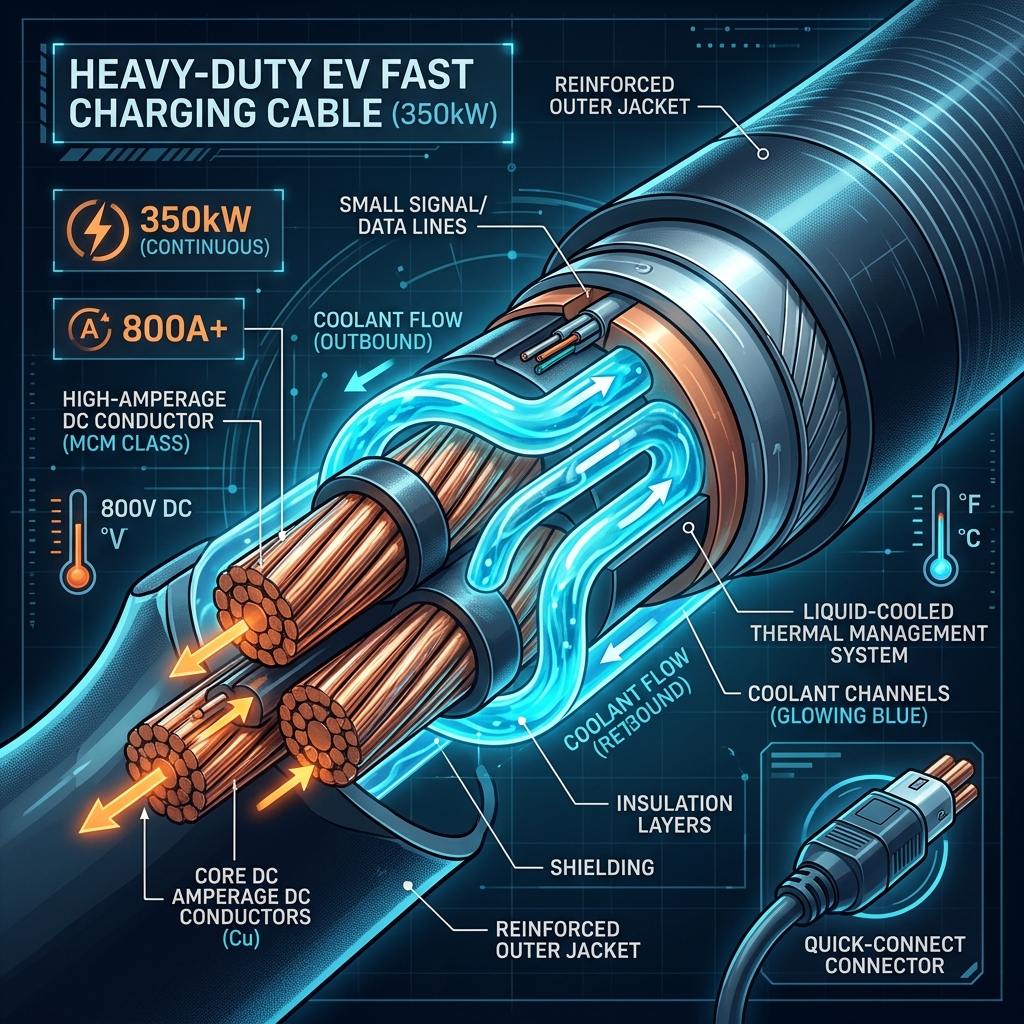
Liquid-Cooled EV Charging Cables: The Physics of Heat Dissipation
Explore the engineering behind liquid-cooled cables that allow 350kW+ DC fast charging stations to deliver high amperage without melting.
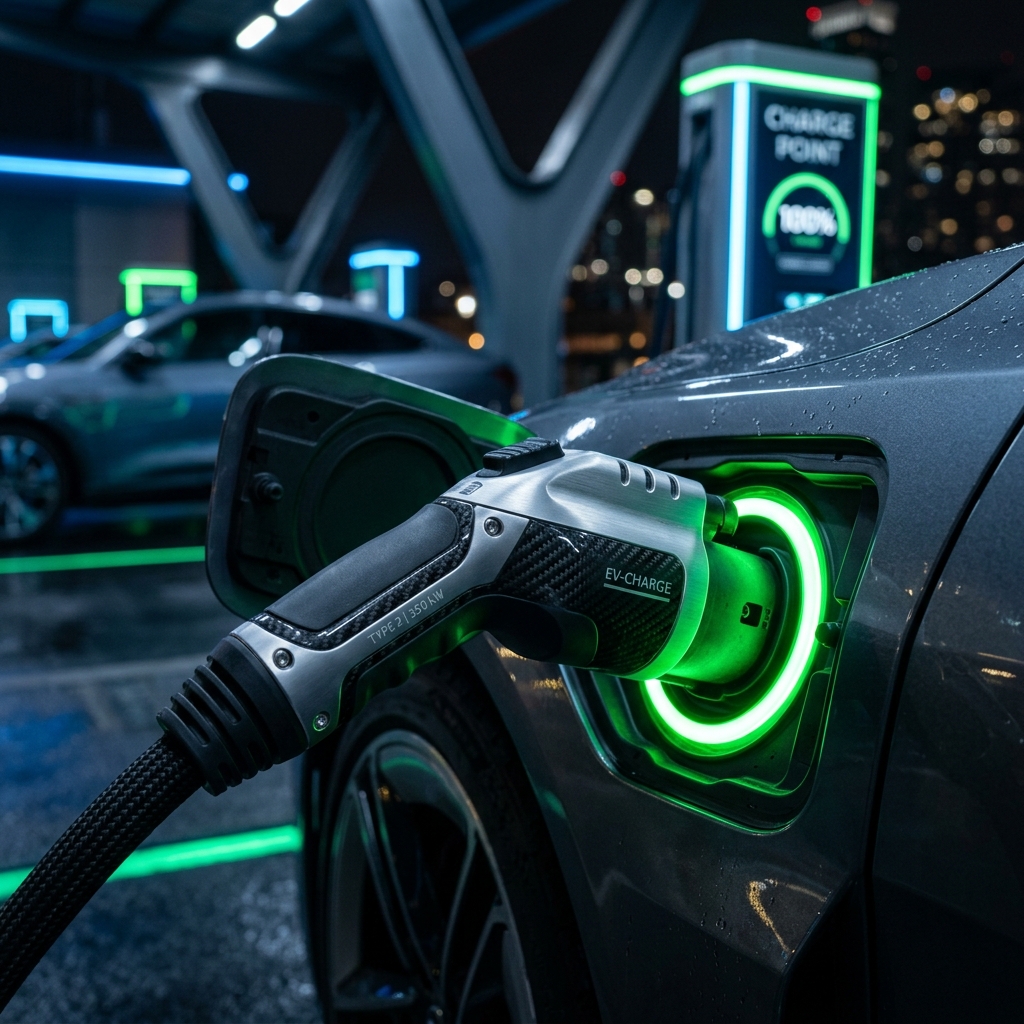
Approved vs. Cheap NACS Adapters: The Risks of Uncertified High-Power Charging
Understand the UL standards for CCS-to-NACS adapters, safety risks of uncertified plugs, and warranty implications of charging at 250kW.
The Cold Charging Bottleneck: How Preconditioning Saves 30 Minutes at DC Fast Chargers
Learn the engineering behind battery pre-conditioning, why cold cells fast-charge slowly to prevent lithium plating, and how to optimize road trip charging.