Power Splitting Explained: Why Your 300kW Charger Only Gives You 50kW
You pull up to a public DC Fast Charging station. The bold decal on the charger cabinet reads "350 kW." Your electric vehicle is low on charge, warm, and capable of pulling 220 kW. You plug in, swipe your card, and wait for the surge of power. But the screen shows the charging speed capping out at just 50 kW or 75 kW.
Why does this happen? The answer lies in a common utility and infrastructure practice known as power splitting or dynamic power sharing. In this guide, we will explain the technical design of charging cabinets, why charging networks split power, and how to select the best stall to avoid slow charging.
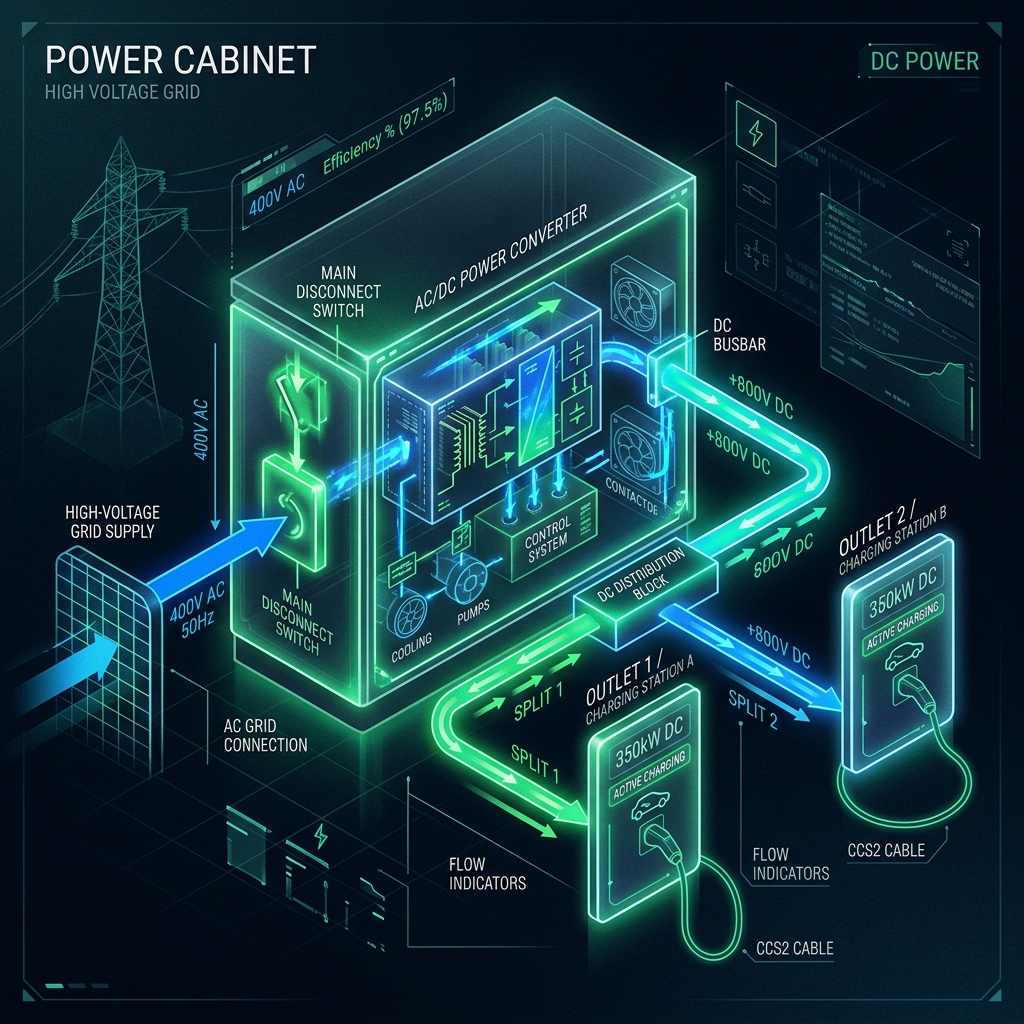
The Architecture of a Fast Charging Station
To understand power splitting, you have to look behind the dispenser. A public DC Fast Charging station is not just a collection of standalone plugs. It consists of two main components:
- The Dispenser: The pedestal containing the screen, payment terminal, and cord that plugs into your car.
- The Power Cabinet: The large metal enclosure located behind a fence or in the corner of the parking lot. This cabinet contains the heavy power electronics (rectifiers) that convert high-voltage Alternating Current (AC) from the utility grid into the Direct Current (DC) your vehicle’s battery needs.
In modern installations, a single power cabinet is shared between multiple dispensers. For example, a 350 kW power cabinet might feed two separate dispensers.
How Power Splitting Works
When only one car is plugged into a pair of shared dispensers, the power cabinet can route all its internal power modules to that single plug, delivering the maximum rate.
However, when a second vehicle plugs into the adjacent dispenser, the power cabinet must divide its capacity. How it does this depends on the charging network:
Static Power Splitting (50/50 Split)
Some older setups use static allocation. If a cabinet is rated for 150 kW and feeds two dispensers, it splits the capacity equally down the middle as soon as a second car plugs in, allocating exactly 75 kW to each.
Even if one car is a Chevrolet Bolt that can only accept a maximum of 55 kW, the other stall remains capped at 75 kW, wasting the remaining capacity.
Dynamic Power Sharing
Modern stations use dynamic power sharing. The cabinet contains multiple independent power modules (typically 25 kW or 50 kW units). The system dynamically assigns these modules to dispensers based on each vehicle's real-time demand.
If Car A is a Porsche Taycan pulling 220 kW, and Car B is a Chevy Bolt pulling 50 kW at an adjacent dispenser fed by a 350 kW cabinet, the system will allocate 250 kW to Car A and 50 kW to Car B, keeping both charging at their maximum rates.
However, if two high-power vehicles plug in simultaneously, they will quickly saturate the cabinet's capacity, and both will experience slower speeds.
Which Charging Networks Split Power?
- Electrify America: Many EA stations use 350 kW cabinets shared between two dispensers (often labeled "A" and "B"). If you plug into 1A and someone else plugs into 1B, you are sharing that power cabinet.
- ChargePoint Express: ChargePoint’s modular stations are designed for power sharing. A single power cabinet setup often distributes energy among two to four plugs.
- Tesla Superchargers (V2 vs V3/V4):
- V2 Superchargers (150 kW max): These are notorious for 50/50 splits. The stalls are labeled in pairs (e.g., 1A and 1B). If you plug into 1B while someone is charging at 1A, your speed will immediately drop, sometimes down to 75 kW or lower.
- V3 & V4 Superchargers (250 kW+): These use a larger busbar cabinet architecture that shares power across a cabinet block of four stalls. Because the cabinet can draw up to 1 MW of power from the grid, it rarely experiences bottlenecks unless all four stalls are occupied by vehicles with very low battery levels.
Strategies to Maximize Your Charging Speed
- Skip Paired Stalls on V2 Superchargers: If you are at a V2 Tesla Supercharger, always look for an empty number. If someone is charging at 1A, park at 2A or 3B instead of 1B.
- Verify the Stall Ratings: Some networks label their shared dispensers. If you see a station with one dispenser rated at 350 kW and one at 150 kW, they may be sharing a single cabinet. If the 350 kW stall is empty, use it.
- Check Nearby Vehicles: If you must park next to another car sharing a cabinet, try to park next to an EV that is nearly finished charging or has a low peak charge rate (like a Bolt or Leaf). An EV at 85% charge draws very little power, leaving the bulk of the cabinet's capacity for you.
Related Guides
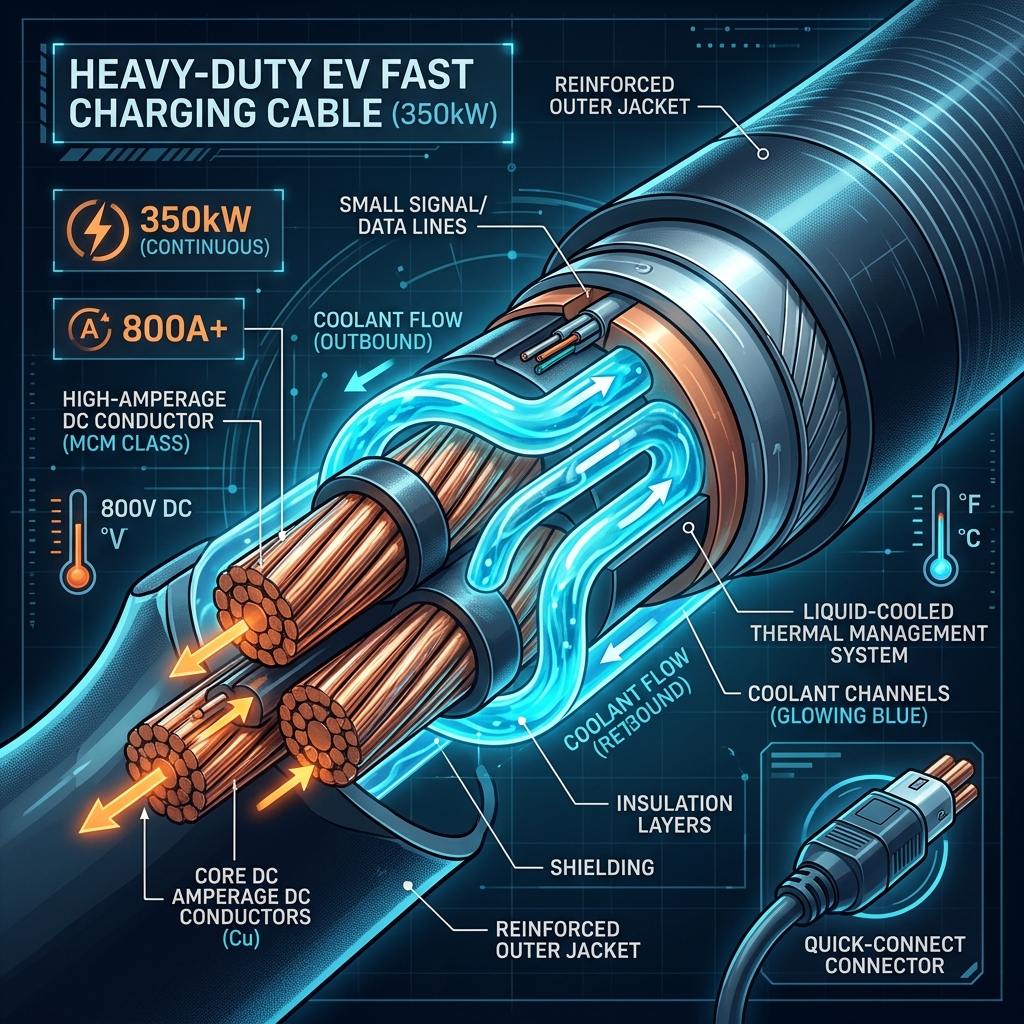
Liquid-Cooled EV Charging Cables: The Physics of Heat Dissipation
Explore the engineering behind liquid-cooled cables that allow 350kW+ DC fast charging stations to deliver high amperage without melting.
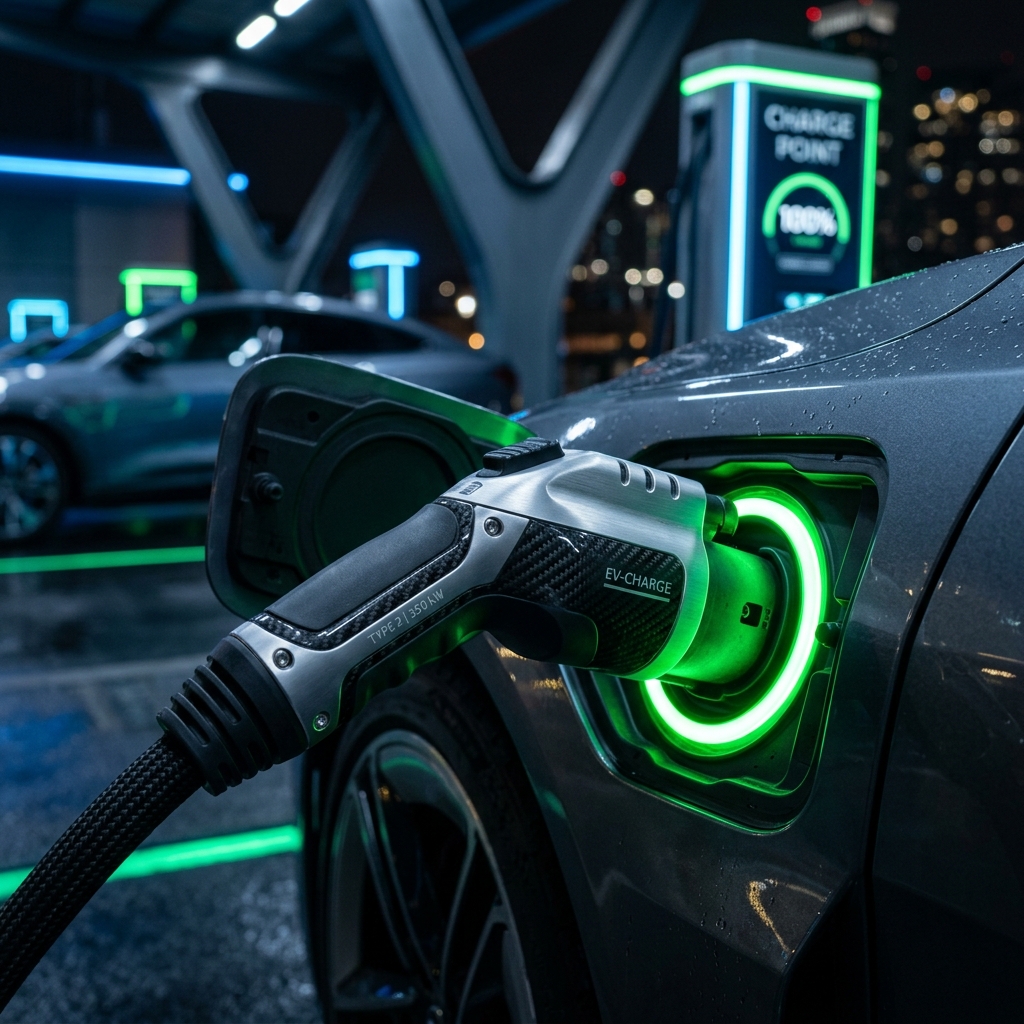
Approved vs. Cheap NACS Adapters: The Risks of Uncertified High-Power Charging
Understand the UL standards for CCS-to-NACS adapters, safety risks of uncertified plugs, and warranty implications of charging at 250kW.
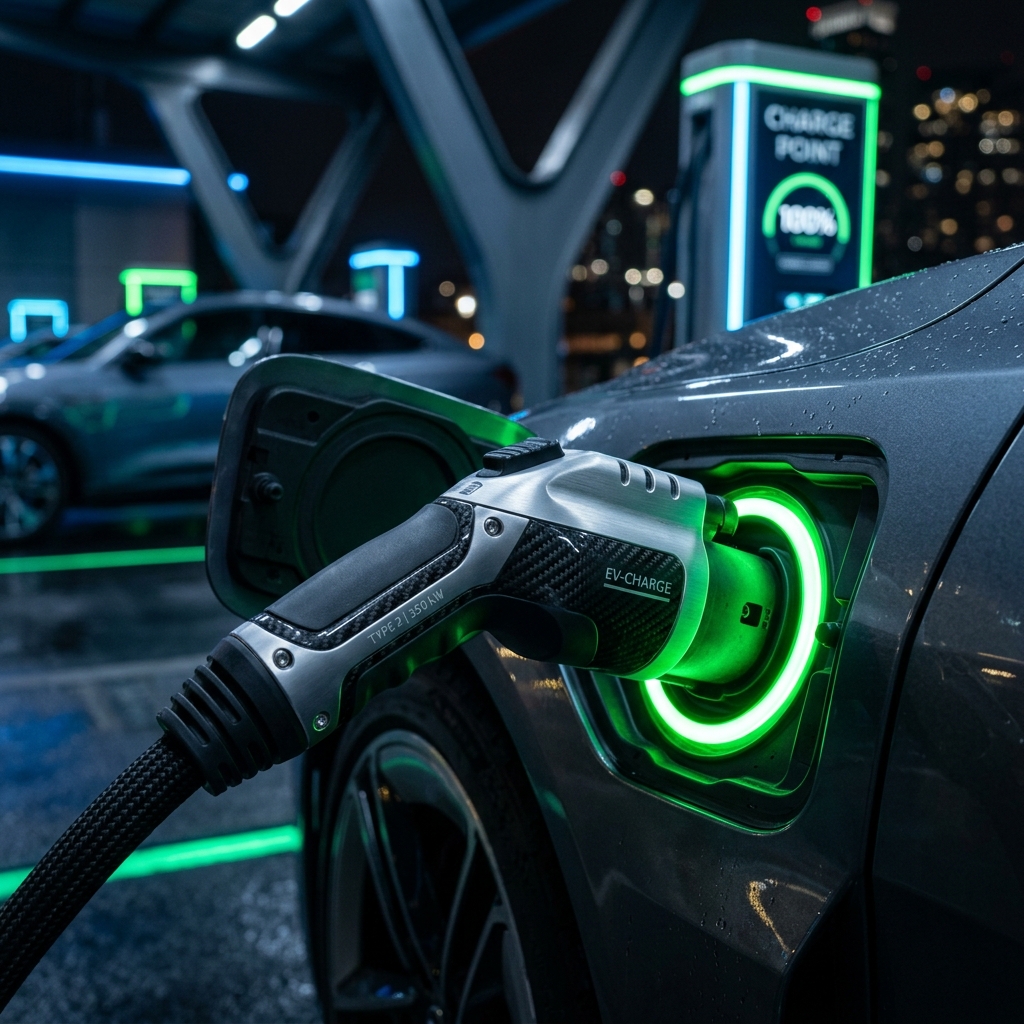
The Cold Charging Bottleneck: How Preconditioning Saves 30 Minutes at DC Fast Chargers
Learn the engineering behind battery pre-conditioning, why cold cells fast-charge slowly to prevent lithium plating, and how to optimize road trip charging.