What Is the Real-World EV Range at 20°F? The Cold Weather Truth
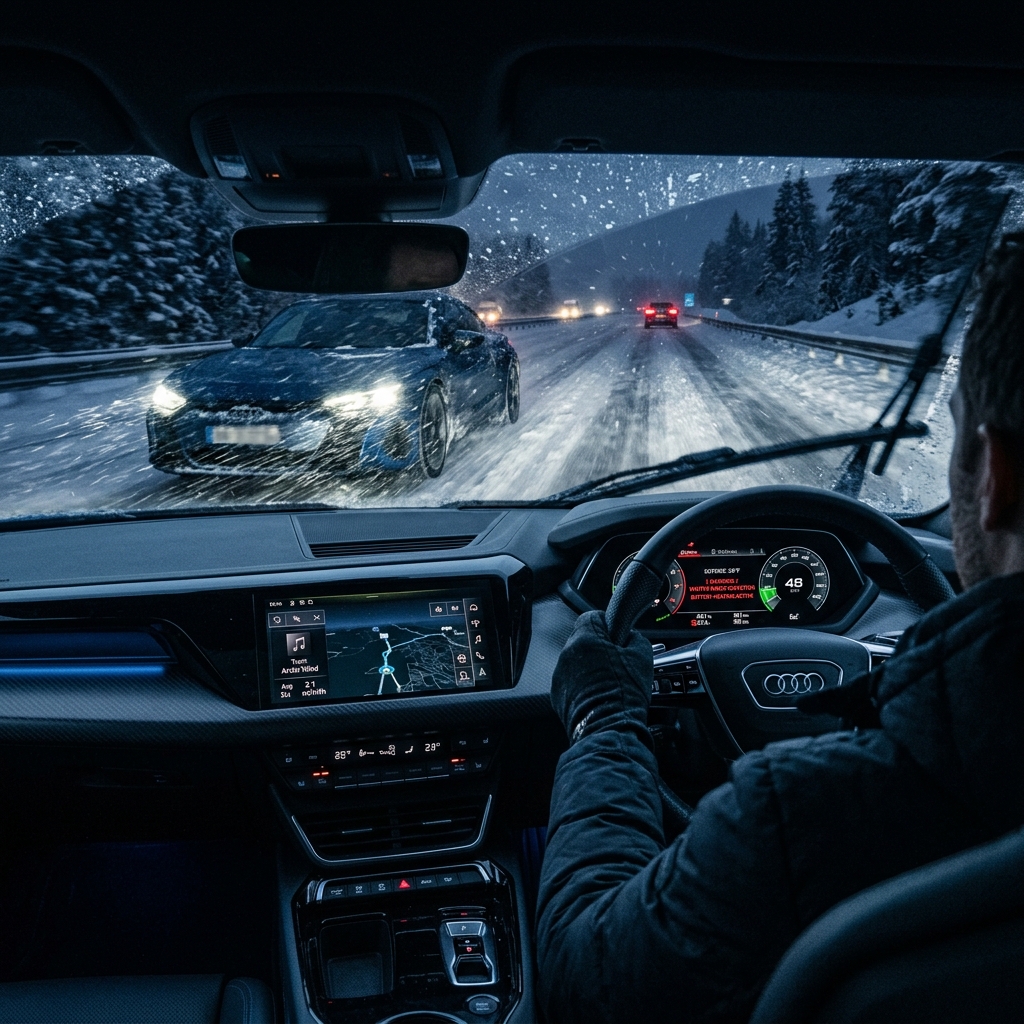
Winter is the most challenging season for electric vehicle ownership. While gasoline cars also experience a drop in fuel economy during cold weather, the visual change of an EV’s remaining range indicator on a freezing morning can be startling. At 20°F (-7°C), many popular EVs experience a 20% to 35% reduction in total driving range.
Why does this happen? Is it a permanent loss of battery capacity, or is it temporary? In this guide, we dive into the electrochemistry of winter battery performance, compare the energy draw of cabin heating systems, and provide practical tips to minimize range loss.
Part 1: The Electrochemistry of Cold Battery Performance
1. Lithium-Ion Transport Kinetics & Electrolyte Viscosity
To understand cold-weather range loss, we must look at what happens inside the lithium-ion battery cells. During discharge, lithium ions move from the negative electrode (anode, typically composed of graphite) through a liquid organic electrolyte, passing through a separator membrane to insert themselves into the positive electrode (cathode, composed of metal oxides such as NMC or LFP).
This process is highly dependent on temperature. As temperature drops:
- Electrolyte Viscosity Spikes: The liquid organic solvent (typically a mixture of carbonates such as ethylene carbonate and dimethyl carbonate) becomes significantly more viscous. At 20°F (-7°C), the viscosity of the electrolyte can increase by a factor of three or four compared to its viscosity at 70°F (21°C).
- Ionic Conductivity Plummets: The thicker electrolyte slows down the rate of lithium-ion diffusion. The ionic conductivity () of the electrolyte drops, following an Arrhenius-type relationship: Where is a pre-exponential factor, is the activation energy for ion transport, is the universal gas constant, and is the absolute temperature in Kelvin. As decreases, drops exponentially.
2. Internal Resistance and Voltage Sag
The drop in ionic conductivity increases the internal resistance () of the cells. When current () is drawn from the battery to power the electric motor, this internal resistance causes a voltage drop (voltage sag) across the terminals:
Where is the open-circuit voltage. At 20°F, the increased results in a larger drop. The cell terminal voltage reaches the lower cutoff limit (typically 2.5V to 3.0V depending on chemistry) much earlier in the discharge cycle, preventing the vehicle from extracting the full electrochemical energy capacity of the cells. This energy is not lost permanently; it is simply inaccessible when cold. The energy lost is dissipated internally as heat:
As the battery pack discharges, this waste heat gradually warms the cells, reducing internal resistance and restoring some capacity, but much of the energy has already been lost during the cold startup phase.
3. Lithium Plating Mechanics during Cold Charging
Charging a cold battery pack introduces a serious degradation risk known as lithium plating. When charging at low temperatures, the rate of lithium insertion (intercalation) into the graphite anode slows down. If the charging current exceeds the intercalation rate, lithium ions accumulate on the surface of the graphite anode and form metallic lithium.
Metallic lithium plating is highly reactive. It reacts with the organic electrolyte, creating a solid electrolyte interphase (SEI) layer that consumes active lithium, leading to permanent capacity loss. In worst-case scenarios, metallic lithium can form microscopic needles called dendrites that can pierce the separator membrane, causing an internal short circuit and potentially triggering thermal runaway.
To prevent this, the Battery Management System (BMS) heavily restricts charging rates (DC fast-charging speeds) when the battery pack is cold.
Part 2: Vehicle Cabin Thermodynamics and HVAC Engineering
An EV is highly efficient, converting approximately 85% to 90% of grid energy into motion. This efficiency means the electric motor and inverter generate very little waste heat. In contrast, an internal combustion engine (ICE) vehicle is inefficient, wasting 70% to 80% of fuel energy as heat. This waste heat is directed into the cabin for heating without extra fuel consumption.
An EV must generate all its cabin heat from scratch, drawing energy directly from the traction battery.
1. Resistive Heating (PTC)
Older and entry-level EVs utilize Positive Temperature Coefficient (PTC) resistive heaters. These work by running high-voltage current through ceramic stones that increase resistance as they heat up, preventing overheating.
While 100% efficient at converting electricity into heat, PTC heaters draw massive power:
- At 20°F, maintaining a cabin temperature of 70°F requires a continuous thermal output of 3 kW to 5 kW.
- Running a 4 kW PTC heater for a 1.5-hour commute consumes 6 kWh of battery energy.
- For a Chevy Bolt with a 65 kWh battery pack, this heating load consumes 9.2% of total battery capacity, reducing range by approximately 25 miles.
3. Vapor Compression Heat Pumps
Modern EVs utilize heat pump systems. A heat pump does not create heat; instead, it uses a vapor compression cycle to move heat from the outside environment into the cabin.
       [Outside Air] ===> [Evaporator] ===> [Compressor] ===> [Condenser] ===> [Cabin Heat]
          (Cold)            (Absorbs)         (Squeezes)         (Releases)         (Warm)
The efficiency of a heat pump is measured by its Coefficient of Performance (COP):
Where:
- is the thermal heat delivered to the cabin.
- is the electrical power consumed by the compressor and pumps.
A standard PTC heater has a COP of 1.0. A modern heat pump operating at 20°F can achieve a COP of 1.8 to 2.5, meaning it delivers 2 to 2.5 kW of heat for every 1 kW of electricity consumed. This drops the HVAC power draw to 1.5 kW to 2 kW, preserving significant battery capacity.
Advanced heat pump architectures (such as Tesla’s Octovalve or Hyundai’s waste heat recovery system) connect the refrigerant loops of the cabin HVAC, electric motor, inverter, and battery pack. This allows the system to capture the small amount of waste heat generated by the drivetrain and use it to warm the cabin or precondition the battery.
Part 3: Aerodynamic Drag Physics at Low Temperatures
Range loss in winter is not caused solely by thermal systems; physics also plays a role. Aerodynamic drag force () resisting a vehicle's forward motion is calculated as:
Where:
- is the drag coefficient.
- is the frontal area.
- is the density of the air.
- is the velocity of the vehicle.
Air density () is determined by the ideal gas law:
Where:
- is the absolute pressure.
- is the specific gas constant for air.
- is the absolute temperature in Kelvin.
Because air density is inversely proportional to temperature, cold air is denser than warm air:
- At 70°F (21°C), dry air density is approximately 1.20 kg/m³.
- At 20°F (-7°C), dry air density rises to 1.33 kg/m³.
- This represents an 11% increase in air density.
Since is directly proportional to air density, the aerodynamic drag force acting on the EV at highway speeds rises by 11% at 20°F. The electric motor must draw 11% more power from the battery simply to push the vehicle through the denser air, reducing highway efficiency.
Part 4: Winter Range Performance Comparison
The following table details the winter range performance and heating system specifications of popular electric vehicles tested at 20°F (-7°C).
| EV Model | Rated EPA Range (mi) | Real-World Range at 20°F (mi) | Range Loss (%) | HVAC System Type | Active Battery Preconditioning? | | :--- | :--- | :--- | :--- | :--- | :--- | | Tesla Model 3 LR (2025) | 341 | 266 | 22% | Heat Pump (Octovalve) | Yes (Navigation Linked) | | Tesla Model Y LR (2025) | 337 | 259 | 23% | Heat Pump (Octovalve) | Yes (Navigation Linked) | | Hyundai Ioniq 6 RWD | 361 | 288 | 20% | Heat Pump (Waste Heat) | Yes (Active) | | Kia EV9 AWD | 304 | 228 | 25% | Heat Pump | Yes (Active) | | Ford F-150 Lightning ER | 320 | 224 | 30% | PTC Resistive | Yes (App Controlled) | | Ford Mustang Mach-E ER | 320 | 227 | 29% | PTC Resistive | Yes (App Controlled) | | Chevrolet Bolt EUV | 247 | 168 | 32% | PTC Resistive | No (Manual Cabin only) | | Rivian R1S (Large Pack) | 321 | 225 | 30% | PTC Resistive | Yes (Navigation Linked) | | Lucid Air Grand Touring | 516 | 392 | 24% | Heat Pump | Yes (Active) | | Volkswagen ID.4 Pro | 291 | 209 | 28% | PTC (US) / Heat Pump (Optional) | Yes (Active) | | Nissan Ariya E-4ORCE | 272 | 196 | 28% | Heat Pump | Yes (Active) | | Porsche Taycan Plus | 318 | 241 | 24% | Heat Pump | Yes (Active) | | BMW i4 eDrive40 | 301 | 222 | 26% | Heat Pump | Yes (Active) | | Polestar 2 Single Motor | 320 | 237 | 26% | Heat Pump | Yes (Active) | | Subaru Solterra | 222 | 146 | 34% | Heat Pump | No (Manual only) | | Toyota bZ4X AWD | 222 | 144 | 35% | Heat Pump | No (Manual only) |
Part 5: Winter Battery Management Systems (BMS) Protocols
The Battery Management System (BMS) acts as the central controller protecting the high-voltage battery pack from winter conditions.
1. Thermal Management Control Loops
Modern EV battery packs are enclosed in insulated thermal jackets containing liquid coolant channels. The BMS controls two primary heating systems:
- Coolant Heaters: High-voltage resistive coolant heaters (typically 3 kW to 7 kW) warm the glycol-water coolant, which is pumped through the battery pack to raise the cell temperatures.
- Motor Stator Heating: Some vehicles (such as Tesla models) run inefficient currents through the electric motor stators when parked. This generates heat inside the motor housing, which is captured by the coolant loop and routed to the battery pack, eliminating the weight and cost of a separate battery coolant heater.
2. Cold Fast-Charging Safety Interlocks
If you plug a cold battery pack into a 350 kW DC fast-charging station, the BMS will prevent high-speed charging. The BMS operates a strict temperature/state-of-charge map:
- Cell Temp < 32°F (0°C): DC charging is restricted to very low currents (typically 10 kW to 20 kW) to prevent lithium plating.
- Cell Temp 32°F to 60°F (0°C to 15°C): Charging speeds are throttled to 50 kW or less.
- Cell Temp > 70°F (21°C): The battery is warm enough to accept maximum current (150 kW to 350 kW).
To bypass this bottleneck, active vehicles feature navigation-linked preconditioning. When you enter a DC fast-charging station into the vehicle's navigation system, the BMS turns on the battery heaters 30 to 60 minutes before arrival, warming the cells to approximately 85°F (29°C) so that the car can accept maximum current the moment it is plugged in.
Part 6: Quantitative Winter Range Estimation Math
To plan road trips with precision, engineers model the total range of an electric vehicle under freezing conditions using a detailed energy balance equation:
Where:
- is the nominal usable capacity of the battery pack in Wh when warm (e.g. 75,000 Wh).
- is the temperature-dependent electrochemical efficiency multiplier (typically 0.95 at 20°F due to internal resistance losses).
- is the driving energy consumption in Watt-hours per mile (Wh/mi) required to overcome rolling resistance and aerodynamic drag at velocity . Due to denser cold air, increases by 5% to 15%.
- is the electrical power drawn by the heating system in Watts (W). For a heat pump, ; for a PTC heater, .
- is the base auxiliary electrical power consumed by onboard electronics, screens, and headlights (typically 300 to 500 W).
- is the driving velocity in miles per hour (mph). Note how dividing by yields the thermal energy penalty per mile.
Step-by-Step Mathematical Workout
Let us compute the real-world range for a Tesla Model Y at 20°F driving at a highway speed of 65 mph:
- Nominal Capacity (): 75,000 Wh.
- Electrochemical Efficiency (): 95% (0.95) at 20°F. Usable battery energy = .
- Base Driving Consumption (): On flat road at 65 mph in warm weather, the Model Y consumes 260 Wh/mi. Under cold 20°F air (11% denser), the drag component raises this consumption to 285 Wh/mi.
- Heat Pump Power (): Draws 1,500 Watts continuous to maintain 70°F.
- Auxiliary Power (): Draws 350 Watts continuous.
- Velocity (): 65 mph.
First, calculate the thermal energy consumed per mile:
Next, sum the driving energy and thermal energy to find the total consumption per mile:
Finally, divide the usable energy by the total consumption:
This represents a 32.5% drop from the vehicle's nominal warm EPA range of 337 miles, demonstrating the combined impact of aerodynamic drag, HVAC draw, and chemistry limits.
Part 7: Mechanical Component Integrity in Sub-Zero Climates
Cold weather affects more than the battery; it alters the mechanical properties of structural components.
1. Suspension Bushings and Shock Absorbers
At 20°F, rubber suspension bushings harden, increasing noise, vibration, and harshness (NVH) in the cabin. The hydraulic fluid inside shock absorbers becomes thicker and more viscous, which restricts damper fluid flow, leading to a stiffer, firmer ride quality over road impacts.
2. Door Seals and Frameless Window Safety
Many modern EVs (including Tesla Model 3/Y and Porsche Taycan) utilize frameless doors. When opening the door, the vehicle computer must drop the window slightly (approx. 0.5 inches) to clear the bright chrome trim gutter.
- Failure Mode: If water freezes along the rubber window seal, the glass cannot retract. Pulling the door handle can bend the motor linkage or tear the rubber gasket.
- Mitigation: Apply a thin layer of specialized silicone lubricant to the window gaskets in autumn to prevent ice adhesion.
Part 8: Convective Cabin Heat Loss & Wind Chill Math
We must also model convective heat loss from the vehicle body. Newton's Law of Cooling defines the convective heat transfer rate from the outer car panels:
Where:
- is the convective heat transfer coefficient in .
- is the surface area of the vehicle cabin cabin shell (approx. for a standard crossover).
- is the temperature of the outer body panels (warmed slightly by cabin conduction).
- is the ambient air temperature.
The convective heat transfer coefficient is highly dependent on wind speed. For fluid flow over a flat surface, the Nusselt number () relates to wind speed:
Where:
- is the Reynolds number, directly proportional to vehicle velocity plus wind speed.
- is the Prandtl number.
- is the thermal conductivity of the air.
When wind speed increases from 0 mph to a driving speed of 65 mph (with a 15 mph headwind, totaling 80 mph relative flow), the convective coefficient rises from approximately to over . This increases heat transfer rate by 700%.
To maintain a comfortable interior temperature, the cabin heater must draw more energy to offset this rapid heat loss. This causes the HVAC draw () to increase from 1.5 kW to over 3.2 kW, which directly accelerates battery depletion.
Part 9: Seasonal Winter EV Maintenance Checklist
To guarantee safety and range retention in freezing climates, perform these tasks:
- Inspect Tire Tread Depth and Rubber Compound: Ensure winter tires are fitted if driving in sustained freezing temperatures. Summer tires lose elasticity below 45°F, becoming hard and losing grip.
- Monitor Cold Tire Pressures weekly: A 10°F drop in temperature reduces tire pressure by approximately 1 PSI. Under-inflated tires increase rolling resistance by 3% to 5%, which directly reduces range.
- Apply Gasket Silicone to Window/Door Seals: Wipe rubber window seals with silicone spray to prevent window glass from freezing shut.
- Confirm 12V Accessory Battery State of Health: Have a technician check the 12V battery's voltage and capacity. Cold weather strains lead-acid chemistry, which can cause sudden 12V failures.
- Windshield Wiper Fluid Concentration: Use winter-formulated fluid containing alcohol to prevent freezing on the windshield.
Part 10: Comprehensive Winter Driving FAQs
Q1: Is cold weather range loss permanent?
No. Cold weather range loss is entirely temporary. It is caused by the physical slowdown of lithium-ion movement through the electrolyte and the energy consumed by the cabin heating system. As soon as ambient temperatures rise, or the battery pack warms up through use or preconditioning, the battery's full original capacity and driving range are restored.
Q2: Why does my EV lose charge overnight in the cold?
If your EV is parked in freezing temperatures, the battery cells cool down, increasing internal resistance and lowering terminal voltage. When you turn the car on, the BMS reads the lower voltage and shows a lower State of Charge (SoC). Furthermore, some vehicles use a small amount of battery energy overnight to run internal heaters to prevent the battery cells from freezing.
Q3: What is preconditioning, and how does it save range?
Preconditioning utilizes grid power to warm the vehicle’s battery pack and cabin before departure. By scheduling preconditioning via your vehicle's mobile app while plugged into your home charger, the energy needed to warm the 1,000-pound battery pack and the cabin air is drawn from the grid. This allows you to start your drive with a warm battery and cabin, and a 100% state of charge.
Q4: Why is my regenerative braking limited in the winter?
In cold temperatures, the battery cells cannot absorb high currents quickly without the risk of lithium plating on the anodes. Because regenerative braking can generate high charging currents (up to 50 kW to 80 kW), the BMS throttles or disables regeneration when the battery is cold to protect cell health.
Q5: How much range do winter tires subtract?
Winter tires utilize softer rubber compounds and deep, aggressive tread blocks to grip snow and ice. This increased traction raises rolling resistance by 5% to 15% compared to low-rolling-resistance summer or all-season tires, reducing overall driving range.
Q6: Can a dead 12V battery prevent an EV from starting in winter?
Yes. Almost all EVs rely on a standard 12V lead-acid or lithium-iron-phosphate accessory battery to power the onboard computers, door locks, and high-voltage relays. If the 12V battery dies due to extreme cold, the vehicle's computers cannot boot up, and the main high-voltage contactors cannot close, rendering the car inoperable even if the main battery pack is at 100%.
Q7: Are LFP batteries worse in the winter than NMC batteries?
Yes. Lithium Iron Phosphate (LFP) batteries exhibit higher internal resistance at low temperatures compared to Nickel Manganese Cobalt (NMC) batteries. LFP packs see a more pronounced drop in capacity and slower fast-charging speeds at 20°F than NMC packs.
Q8: Should I leave my EV plugged in during extreme cold snaps?
Yes. Leaving your vehicle plugged in (even on a standard 120V household outlet) allows the BMS to draw power from the grid to run battery warmers, keeping the cells at a safe storage temperature and preserving range.
Q9: Does using ECO mode help in winter?
Yes. ECO mode softens throttle response, which prevents high current spikes that cause voltage sag in cold batteries. It also reduces the maximum power output of the cabin heater, preserving battery capacity.
Q10: How much range does driving at 70 mph vs. 60 mph consume in the winter?
Because aerodynamic drag force rises with the square of velocity, and cold winter air is 11% denser, driving at 70 mph in freezing weather consumes approximately 20% to 25% more energy per mile than driving at 60 mph.
Q11: What is the optimal temperature for an EV battery?
Lithium-ion cells operate most efficiently between 70°F and 95°F (21°C to 35°C). Within this temperature range, ionic conductivity is high and internal resistance is minimized.
Q12: Why does my EV cabin feel drafts in winter?
Without a hot engine block under the hood, there is no passive heat radiating through the firewall. The cabin relies entirely on active HVAC air ducts and heating elements, making drafts more noticeable.
Q13: Can I jump-start an EV using a gas car?
You can jump-start the EV's 12V accessory battery using a gas car or a portable jump pack to boot up the computers. However, you cannot charge the main high-voltage traction battery this way.
Q14: How does snow build-up on the car body affect range?
Snow and ice on the vehicle add weight and significantly disrupt the vehicle's aerodynamic profile, increasing drag. Always clear all snow and ice from the hood, roof, and trunk before driving.
Q15: Why do some EVs have heated charge ports?
In freezing rain or snow, the charge port door and locking pin can freeze shut, preventing you from inserting or removing the charging plug. Heated charge ports prevent ice build-up.
Q16: How do heated seats save energy?
Heated seats transfer heat directly to your body via conduction, drawing only 50 to 100 Watts. Heating the cabin air via convection requires heating the entire air volume, drawing 2,000 to 5,000 Watts.
Q17: What is the maximum current limit on a cold battery?
The BMS limits current draw during acceleration when the battery is cold to prevent voltage sag from dropping below the safety cutoff threshold.
Q18: Are heat pumps noisy in winter?
Heat pumps utilize a compressor and fans to move heat. In very cold weather, they work harder and can produce a noticeable humming or buzzing sound from the front of the vehicle.
Q19: Does battery preconditioning happen automatically?
It occurs automatically in vehicles with active thermal management if you set a DC fast-charging station as your destination in the native GPS navigation system.
Q20: What is the minimum temperature for storing an EV?
Most manufacturers recommend not storing an EV in temperatures below -22°F (-30°C) for extended periods unless it is plugged in, allowing the battery heaters to run.
Q21: How does wet snow on the road affect rolling resistance?
Driving through slush or wet snow requires the tires to displace heavy water-slurry, increasing rolling resistance by 20% to 50%, which reduces range.
Q22: What is the "Snow Mode" setting on an EV?
Snow Mode adjusts the traction control system to prevent wheel spin on slippery surfaces and reduces regenerative braking torque to prevent slide risks.
Q23: Can I run my EV cabin heater while fast charging?
Yes. However, the energy used to heat the cabin will be drawn from the charger, slightly reducing the rate of energy flowing into the battery pack.
Q24: Do LFP batteries require different winter storage?
LFP batteries should be stored plugged in during extreme cold snaps to allow the BMS to monitor and heat the cells, preventing voltage drops.
Q25: Why does the range estimate drop suddenly after driving a few miles in winter?
Many EVs use a dynamic range estimator (often called a "Guess-o-Meter") that calculates remaining range based on recent driving history. If you start driving in cold air with the cabin heater on high, the estimator adjusts its projection down rapidly to reflect the high energy consumption.
Q26: Does parking in a garage help winter range?
Yes. An unheated garage is typically 10°F to 20°F warmer than the outdoor air and blocks wind, keeping the battery pack warmer and reducing the energy required for startup heating.
Q27: How does battery thermal mass affect cooling and heating?
An EV battery pack is very heavy (typically 800 to 1,200 lbs) and has a high thermal mass. It takes several hours of exposure to cold air to cool the pack down, but it also takes significant energy and time to heat it back up.
Q28: How do winter rims impact EV range?
Heavy steel aftermarket rims increase rotational inertia and rolling resistance, reducing total range. Lightweight aerodynamic alloy wheels are recommended.
Q29: Can I use hot water to de-ice my EV windows?
Never pour hot water on cold automotive glass. The extreme thermal shock can instantly crack or shatter the window glass. Use windshield defrosters and safe scraper tools instead.
Q30: What is the effect of wind chill on an EV?
Wind chill does not affect the actual temperature of inanimate objects like battery packs below the ambient air temperature. However, high winds increase convection heat loss from the battery casing, causing it to cool down faster.
Q31: How do battery heaters work?
Battery heaters are high-voltage resistive elements that heat the liquid coolant loop, or pad heaters stuck directly to the bottom of the battery modules.
Q32: Why does fast charging stop early in the winter?
In cold weather, the BMS may terminate the fast-charging session early or throttle speeds to a crawl above 70% SoC to prevent lithium plating as the cells struggle to accept charge.
Q33: Can I use an OBD2 scanner to monitor battery temperature?
Yes. Using a Bluetooth OBD2 scanner connected to your car's diagnostic port and an app (like LeafSpy or ScanMyTesla) allows you to read real-time cell temperatures and internal resistance.
Q34: Does cabin preconditioning warm the battery pack?
In some vehicles, yes. In others, cabin preconditioning only warms the cabin air. Refer to your owner's manual to see if battery warming is linked to cabin climate scheduling.
Q35: How does regen limit display on my dashboard?
A regen limit displays on the power meter, often as dotted lines or a restricted blue/green bar indicating that standard regenerative braking is throttled.
Q36: Will my EV heater blow cold air initially like a gas car?
No. Electric heaters (both PTC and heat pumps) deliver warm air almost instantly (typically within 10 to 30 seconds) because they do not have to wait for an engine block to heat up.
Q37: Can extreme cold damage an EV battery pack?
Extreme cold does not damage the cells if they are left at a moderate state of charge. However, if the battery is fully discharged (0%) and exposed to temperatures below -30°F, the liquid electrolyte can physically freeze, causing internal cell damage.
Q38: How does passenger count affect winter range?
More passengers increase the vehicle's total mass, which requires slightly more energy for acceleration and climbing. However, passenger body heat slightly reduces the heating load required from the HVAC system.
Q39: What is the effect of freezing rain on flush door handles?
Flush door handles (which pop out when unlocked) can freeze shut in ice storms. Many manufacturers design the handle motor with extra torque to break through ice, but manual scraping may be required.
Q40: Does winter driving affect EV tire wear rates?
Yes. The high torque of electric motors combined with slippery winter road surfaces can increase tire slip, leading to accelerated tread wear on soft winter tires.
Q41: How do I charge my EV if the charge port door is frozen shut?
Gently tap around the edges of the charge port door with your palm to break the ice seal. Do not pry it open with metal tools, which can scratch the paint and damage the door mechanism.
Q42: Does driving in snow consume more energy than driving on dry asphalt?
Yes. Pushing through snow or slush requires the tires to displace mass, significantly increasing rolling resistance. Expect a 10% to 20% range penalty when driving on snow-covered roads.
Q43: What is the impact of low-voltage battery failure on fast charging?
If the 12V accessory battery fails or is weak, the vehicle cannot communicate with the fast charger, preventing a charging session from initiating.
Q44: Can I use aftermarket grill covers to block cold air?
No. EVs require air flow through the front radiator to cool the inverter, motor, and battery thermal management system when charging or under high load. Blocking vents can cause system errors.
Q45: How long does a cold battery take to warm up during normal driving?
Depending on battery mass, driving speeds, and ambient temperatures, it can take 30 to 60 minutes of highway driving to warm a cold battery pack to its optimal operating temperature.
Q46: What is convective heat transfer?
Convective heat transfer is the transfer of heat from a solid object to a moving fluid (like air flowing over a moving car body).
Q47: Why does the windshield defroster consume so much energy?
The defroster runs the AC compressor to dehydrate the air while simultaneously running the heater core to warm it, drawing maximum electrical power.
Q48: How does ice on active shutter grills affect system health?
If the active shutters freeze shut, the motor that drives them can trigger a fault code on the dashboard, requiring mechanical de-icing.
Q49: What is the impact of cold shock absorber fluid?
Thick hydraulic fluid reduces damper travel speed, causing a firmer, stiffer ride over bumps in winter.
Q50: How do frameless windows clear ice?
When you pull the door handle, a heater wire or motor force attempts to drop the glass slightly to clear the trim gutter. If stuck, apply silicone spray.
Part 11: Winter EV Range Glossary
- Ionic Conductivity: The measure of a material's ability to conduct electricity by the movement of ions.
- Viscosity: The measure of a fluid's resistance to gradual deformation by shear or tensile stress; thickness.
- Arrhenius Equation: A formula for the temperature dependence of reaction rates, showing how chemical activity drops as temperature decreases.
- Voltage Sag: A temporary drop in terminal voltage caused by current flow passing through internal resistance.
- Lithium Plating: The formation of metallic lithium on the anode during charging, which degrades battery capacity.
- Dendrite: Microscopic, needle-like metallic structures that can grow on the anode during cold charging, risking short circuits.
- PTC Heater: Positive Temperature Coefficient resistive heating elements that draw high current to generate heat.
- Heat Pump: A thermodynamic device that transfers heat from a colder area to a warmer area using a compressor cycle.
- COP (Coefficient of Performance): The ratio of useful heating or cooling provided to the work required.
- Air Density: The mass of air per unit volume, which rises as temperature drops.
- Preconditioning: The process of heating or cooling the battery and cabin before driving, using grid power.
- BMS (Battery Management System): The control computer managing battery safety, cell balancing, and thermal limits.
- Thermal Mass: The ability of a body to store thermal energy, determined by its mass and specific heat.
- SEI (Solid Electrolyte Interphase): A protective layer formed on the anode during early cycles that consumes active lithium.
- NTC Thermistor: A temperature sensor whose resistance drops as temperature rises, used for safety monitoring.
- Octovalve: Tesla's advanced 8-way coolant valve that directs thermal energy between the motor, battery, and cabin.
- Glycol Coolant: A mixture of water and ethylene or propylene glycol used to transfer heat in liquid cooling loops.
- Resistive Heating: The generation of heat by passing electric current through a conductor, equal to .
- Convection Heat Loss: The transfer of heat from a body to the surrounding air due to air currents.
- Conduction Heat Loss: The transfer of heat through direct contact between solid materials.
- Radiation Heat Loss: The emission of electromagnetic energy from a warm body to its surroundings.
- State of Charge (SoC): The percentage of remaining energy relative to total usable capacity.
- State of Health (SoH): The remaining capacity of a degraded battery relative to its factory specifications.
- Open-Circuit Voltage (OCV): The difference of electrical potential between two terminals of a device when disconnected from any circuit.
- Terminal Voltage: The voltage output of a cell when under load, impacted by internal resistance.
- LFP (Lithium Iron Phosphate): A battery chemistry utilizing iron phosphate cathodes, durable but sensitive to cold.
- NMC (Nickel Manganese Cobalt): A common battery chemistry offering high energy density and better cold performance than LFP.
- Vapor Compression Cycle: The thermodynamic cycle used in heat pumps and air conditioners to move heat.
- Refrigerant Loop: The closed piping network routing chemical refrigerant through compressor, condenser, and evaporator.
- Active Cooling: Liquid cooling channels integrated into the battery pack to regulate temperature.
- Passive Cooling: Heat dissipation relying on air flow over the battery casing.
- Lithium Intercalation: The insertion of lithium ions into the host electrode structure during charge/discharge.
- Voltage Cutoff: The lower voltage limit below which cell discharge is terminated to protect chemistry.
- Unsprung Weight: The mass of tires, wheels, and brakes not supported by the vehicle suspension.
- Rotational Inertia: The resistance of a rotating wheel to changes in rotational speed.
- OBD2 Port: The standard vehicle diagnostic port used to access internal system logs.
- LeafSpy App: A specialized mobile app used to retrieve battery health data from Nissan Leaf controllers.
- ScanMyTesla App: A detailed telemetry logging app for Tesla vehicles.
- Friction Brake Fade: The loss of stopping power when brake pads overheat.
- Regen Limit: The safety throttling of regenerative braking power by the BMS.
- Thermal Shock: The mechanical stress caused by rapid, uneven temperature changes in solid materials.
- Dielectric Strength: The maximum electric field a material can withstand without electrical breakdown.
- Arc Flash: A high-energy electrical discharge across an air gap.
- Contact Finger: Flexible electrical contacts that maintain pressure during connection.
- Wind Chill Factor: The perceived drop in temperature on exposed skin caused by wind, which does not affect inanimate objects.
- Convection Coefficient: The parameter defining the rate of heat transfer between a solid surface and a fluid.
- Specific Heat Capacity: The energy required to raise the temperature of 1 gram of a substance by 1°C.
- Traction Motor: The high-power electric motor that drives the vehicle's wheels.
- Stator Heating: Using the electric motor coils as heating elements when stationary.
- Active Grill Shutters: Movable shutters that close to block cold air flow, improving aerodynamics in winter.
- Convective Heat Transfer Rate: The rate of thermal energy transfer between a solid surface and a moving fluid, in Watts.
- Nusselt Number (Nu): A dimensionless parameter indicating the ratio of convective to conductive heat transfer across a fluid layer.
- Reynolds Number (Re): A dimensionless parameter representing the ratio of inertial forces to viscous forces in a fluid flow.
- Prandtl Number (Pr): A dimensionless parameter representing the ratio of momentum diffusivity to thermal diffusivity.
- Thermal Conductivity (k): The physical property of a material indicating its ability to conduct heat.
- Silicone Lubricant: A synthetic fluid used to lubricate rubber gaskets to prevent freezing adhesion.
- Hydraulic Fluid Viscosity: The measure of fluid thickness in shock absorbers, which increases in cold weather.
- Auxiliary Power (P_aux): The baseline power consumed by accessory vehicle systems (lighting, computers, audio).
- NTC Sensor: Negative Temperature Coefficient sensor used for high-accuracy temperature measurements.
- Dotted Line Indicator: A dashboard display layout showing restricted acceleration or regenerative power limits when cold.
- Vapor compression loop: The closed loop housing the compressor, condenser, and refrigerant to transfer thermal energy.
- Octovalve manifold: The centralized coolant distribution valve used to link battery, motor, and cabin heat circuits.
- Active preconditioning: Active warming of the battery using onboard coolant heaters prior to road trips.
Related Guides
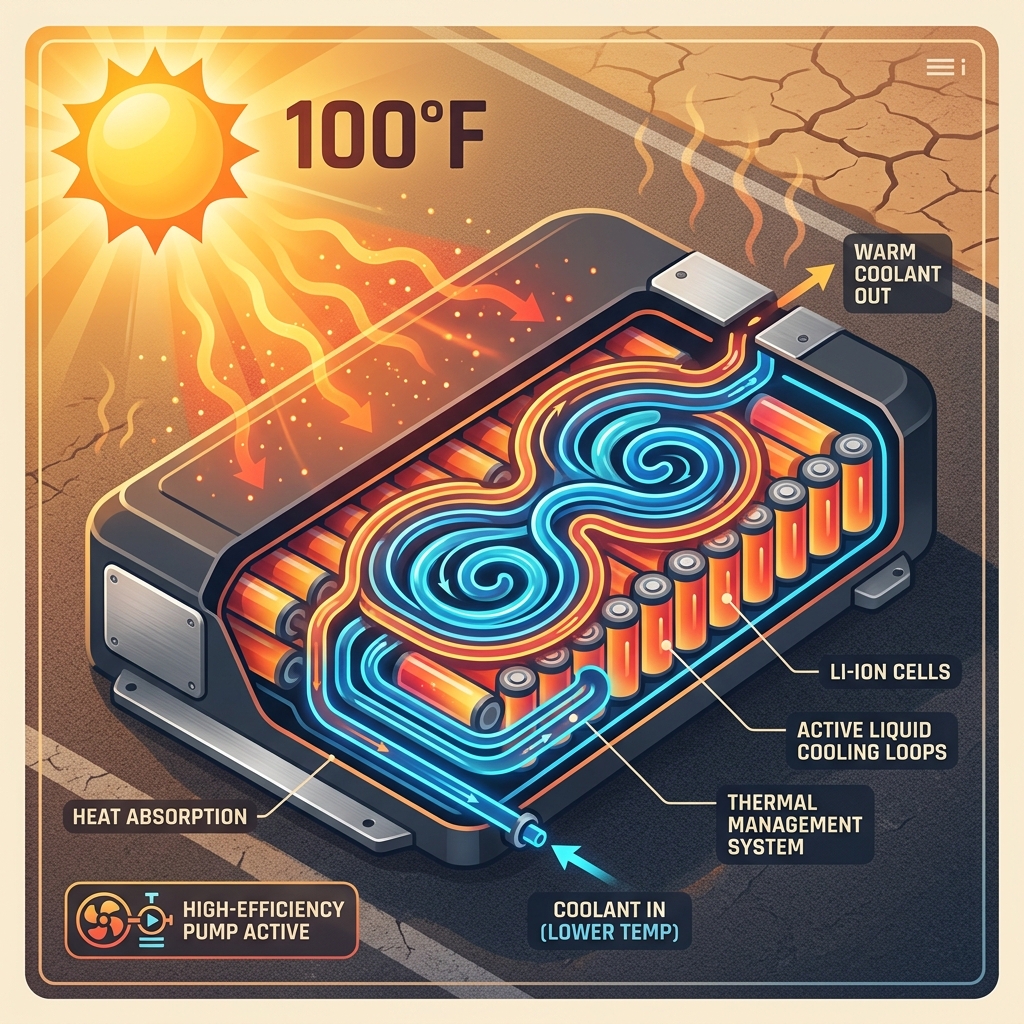
How Summer Heat Waves Degrade Lithium-ion EV Battery Lifespans
Understand how sustained temperatures above 100 degrees Fahrenheit increase battery cell degradation rates, speed up capacity loss, and impact daily range.
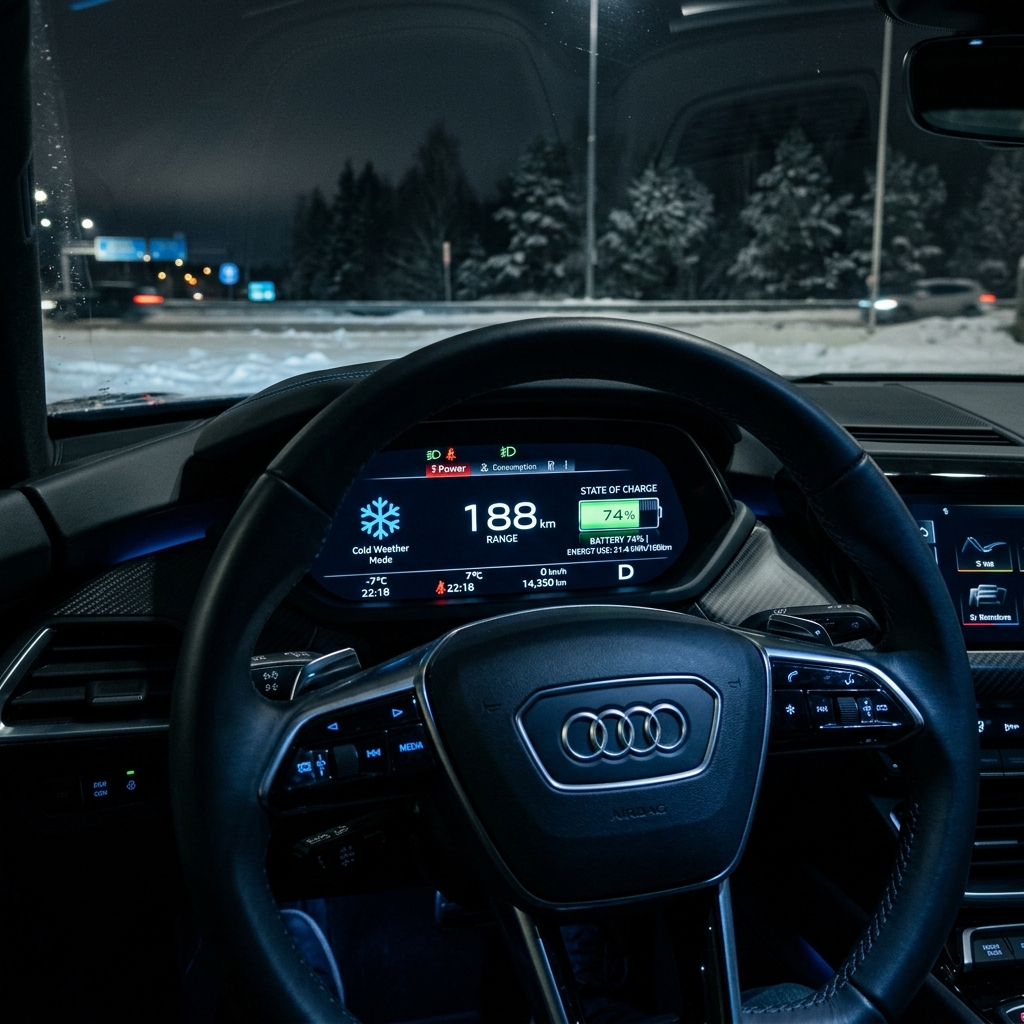
Why You Should Charge LFP Batteries to 100% Weekly (And Why It Ruins NMC Packs)
Discover the electrochemical reasons why LFP batteries thrive when charged to 100% weekly to calibrate SoC sensors, while NMC packs experience accelerated degradation.
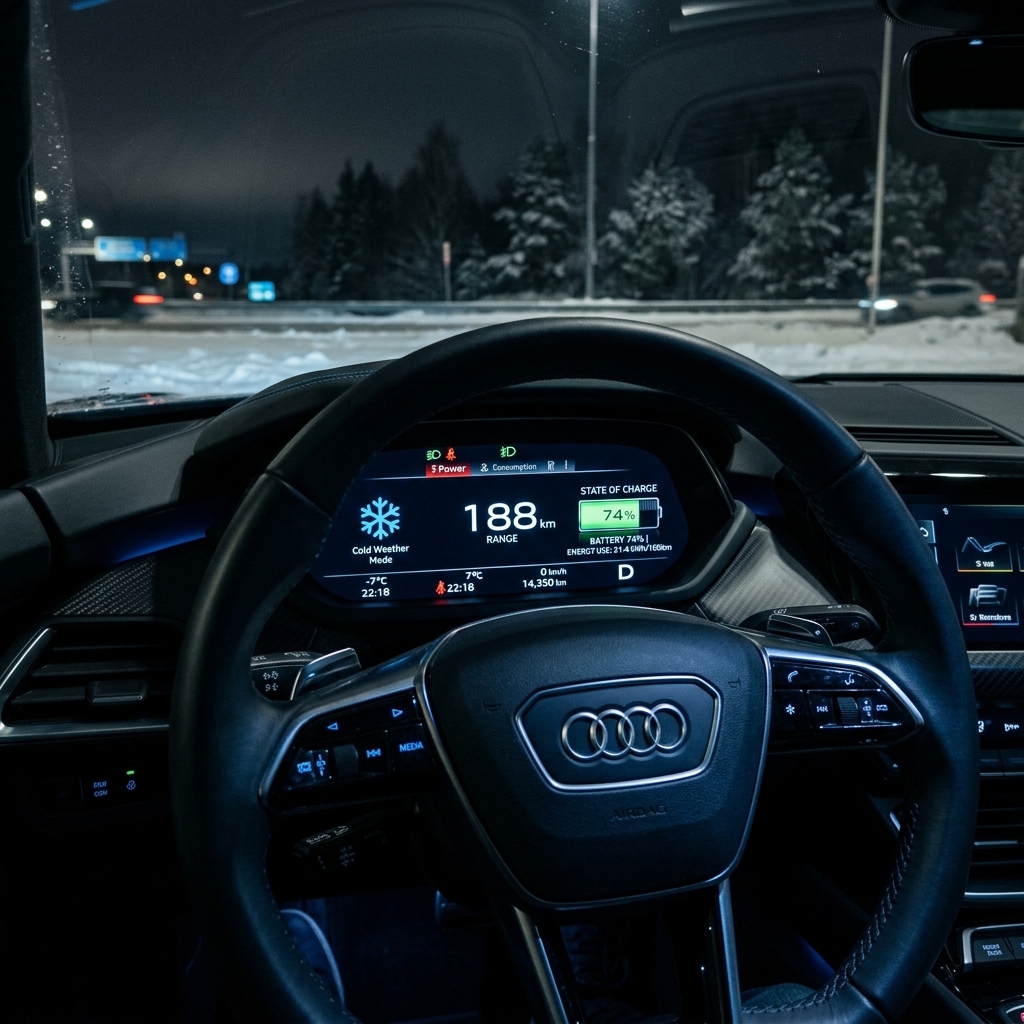
LFP vs. NMC Winter Performance: Why Entry-Level EVs Drop More Range in the Cold
Understand the electrochemical differences between LFP and NMC batteries, why standard range EVs experience steeper winter range drops, and cold weather optimization.