The Electrician Load Calculation Guide: How to Determine If Your 100-Amp Panel Is Maxed Out
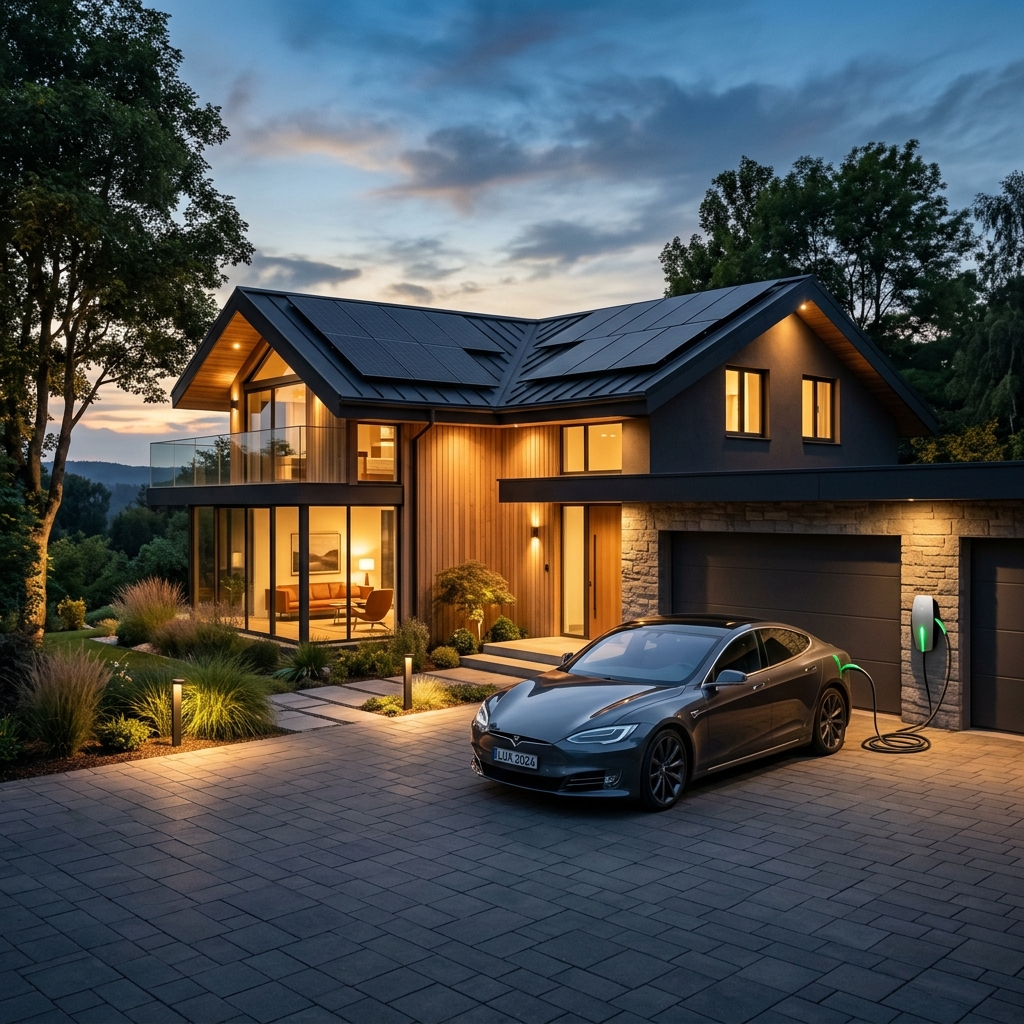
When you consult an electrician to install a Level 2 EV charger, one of the first things they will inspect is your main electrical service panel. Many older homes are equipped with 100-Amp main breakers. If your home has an electric stove, clothes dryer, and central air conditioner, you may be told that you need a costly 200-Amp panel upgrade.
But before you spend thousands of dollars, it is helpful to understand how electricians calculate panel capacity under the National Electrical Code (NEC Article 220). In this guide, we walk you through the math of a residential load calculation.
The NEC Article 220 Method: Standard vs. Optional
The NEC provides two primary methods for calculating a home's load: the Standard Method (complex, dividing loads by square footage and specific appliance tables) and the Optional Method (NEC Section 220.82). The Optional Method is the industry standard for existing homes.
To use the Optional Method, you sum all appliance and heating/cooling loads, apply a demand factor to account for the fact that you rarely turn everything on at once, and divide by voltage.
Step-by-Step Optional Load Calculation
Here is how the calculation works for a typical 2,000 sq ft home:
-
General Lighting and Receptacles: NEC specifies 3 Volt-Amps (VA) per square foot:
-
Small Appliance and Laundry Circuits: NEC requires adding 1,500 VA for each kitchen small appliance circuit (typically 2) and the laundry circuit (1):
-
Add Fastened-in-Place Appliances:
- Electric Range/Oven: 8,000 VA
- Electric Water Heater: 4,500 VA
- Electric Dryer: 5,000 VA
- Dishwasher: 1,200 VA Subtotal appliances: 18,700 VA
-
Sum and Apply Demand Factor: Combine general lighting, circuits, and appliances: Under Section 220.82, we take 100% of the first 10,000 VA and 40% of the remainder:
-
Add Climate Control (Heating/Cooling): Add 100% of either the A/C load or the space heating load (whichever is larger, since you do not run both at once). Let's assume a 4-ton A/C unit drawing 6,000 VA:
-
Convert to Amps: Divide by standard residential voltage (240V):
In this scenario, the house draws 98.7 Amps of calculated load before adding the EV charger. Since a 48A charger draws 48A continuously, adding it would push the load to 146.7A, which exceeds a 100A panel capacity. However, a 16A charger (drawing 16A on a 20A breaker) would only push the load to 114.7A, which might be permissible under certain utility adjustments, or you can use a smart load shed device (which automatically pauses EV charging if the home load exceeds 80A) to bypass the panel upgrade entirely!
Related Guides
Continuous Load Breaker Math: Sizing the Electrical Circuit for a 48-Amp Home Charger
Learn the National Electrical Code requirements for EV charger breakers. Understand the 125% continuous load rule and how to size wires and breakers safely.
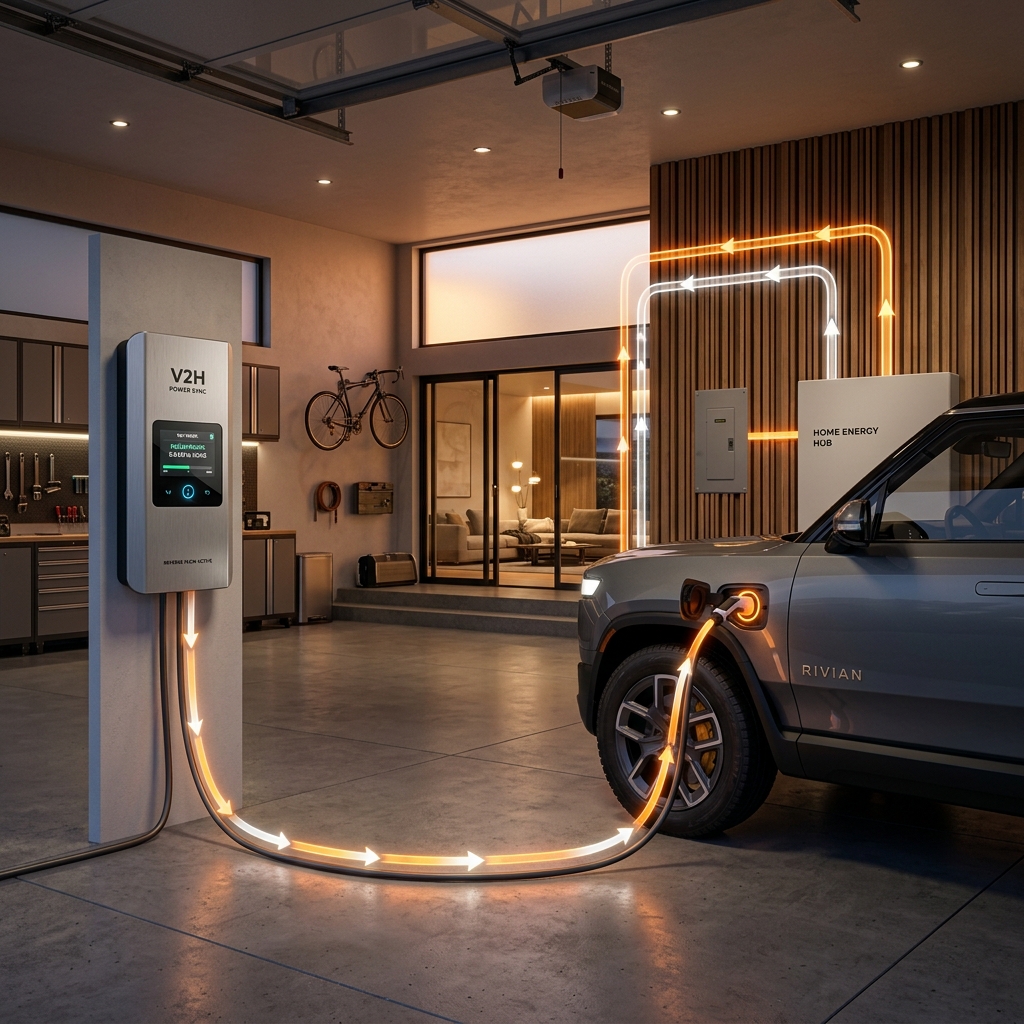
Bidirectional Charging (V2H/V2G): How to Use Your EV as a Home Backup Generator
Learn how vehicle-to-home (V2H) bidirectional charging works, which electric cars support it, the equipment required, and how it compares to traditional backup generators.
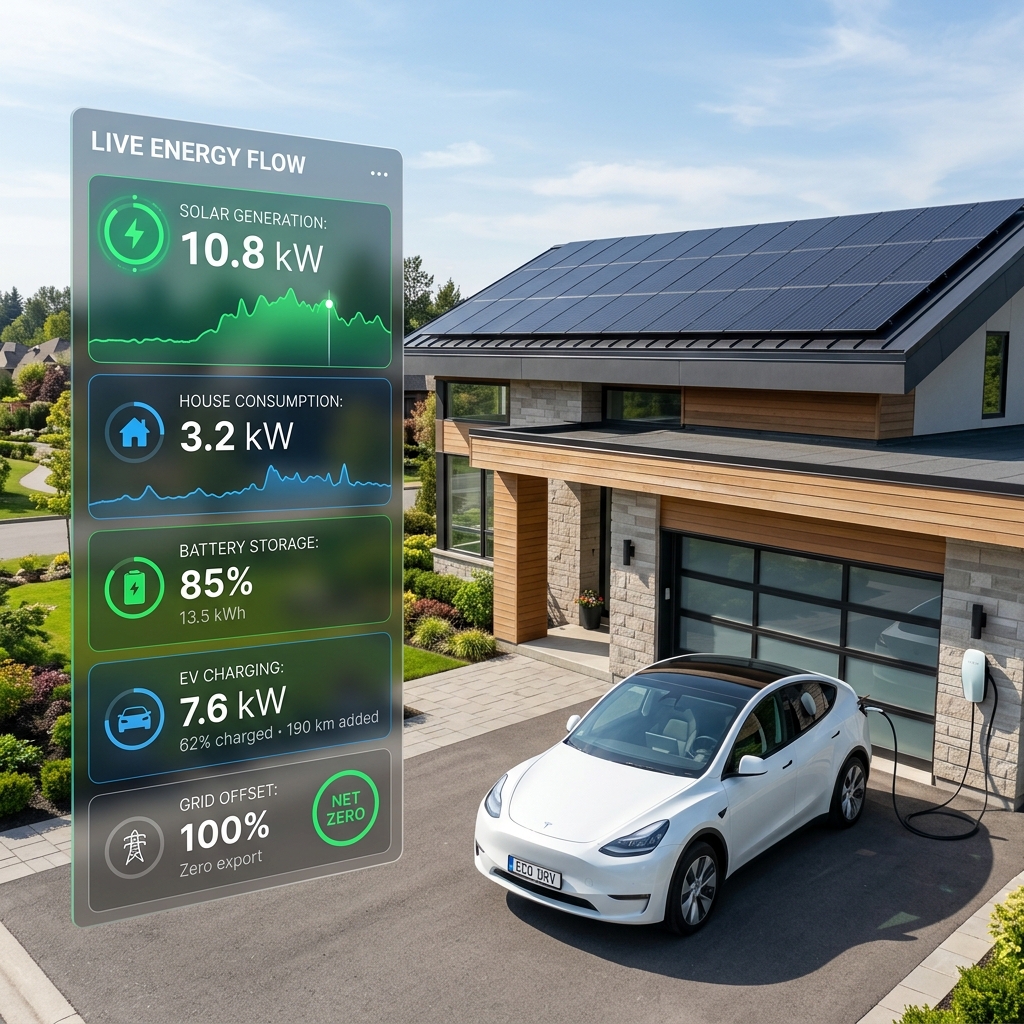
How Many Solar Panels Do I Need to Charge My EV at Home for Free?
A step-by-step calculator guide to sizing a home solar panel system specifically to offset the electricity consumed by your electric vehicle.