Why You Should Charge LFP Batteries to 100% Weekly (And Why It Ruins NMC Packs)

One of the most common pieces of advice given to new electric vehicle owners is: "Do not charge your battery to 100% unless you are going on a road trip." This rule is crucial for vehicles with Nickel Manganese Cobalt (NMC) batteries. However, for vehicles with Lithium Iron Phosphate (LFP) batteries, manufacturers like Tesla actively recommend charging to 100% at least once a week.
Why does charging behavior differ so significantly between these two chemistries? The answer lies in cell voltage characteristics and State of Charge (SoC) estimation math.
The Problem with NMC at 100%
NMC batteries operate at a high voltage (~4.2V when fully charged). Maintaining a high state of charge creates significant electrical and physical stress inside the cell:
- Electrolyte Oxidation: Keeping an NMC cell at 4.2V speeds up the chemical breakdown of the liquid electrolyte at the cathode surface.
- Mechanical Crack Propagation: The active cathode materials expand and contract during cycles. Keeping the cell at high SoC causes micro-cracking inside cathode particles, permanently trapping lithium.
As a result, charging an NMC battery to 100% daily can double the rate of capacity degradation compared to limiting daily charges to 80%.
The LFP Difference: The Flat Voltage Curve
LFP chemistry is highly stable and does not suffer from the same chemical degradation pathways at high voltages. More importantly, LFP batteries require 100% charges to remain functional due to their open-circuit voltage profile.
LFP cells have an incredibly flat voltage curve. Whether the cell is at 90% charge or 30% charge, it sits at roughly the same voltage (~3.2V). Because the voltage doesn't change much as the battery drains, the Battery Management System (BMS) cannot estimate the remaining capacity simply by measuring voltage.
Instead, the BMS relies on coulomb counting—tracking how much electricity flows in and out. Over time, slight measurement errors accumulate, causing the BMS to lose track of the true capacity (known as SoC drift). The only way to recalibrate the system is to charge the battery to 100% (the high-voltage cutoff point), allowing the BMS to reset its baseline.
Related Guides
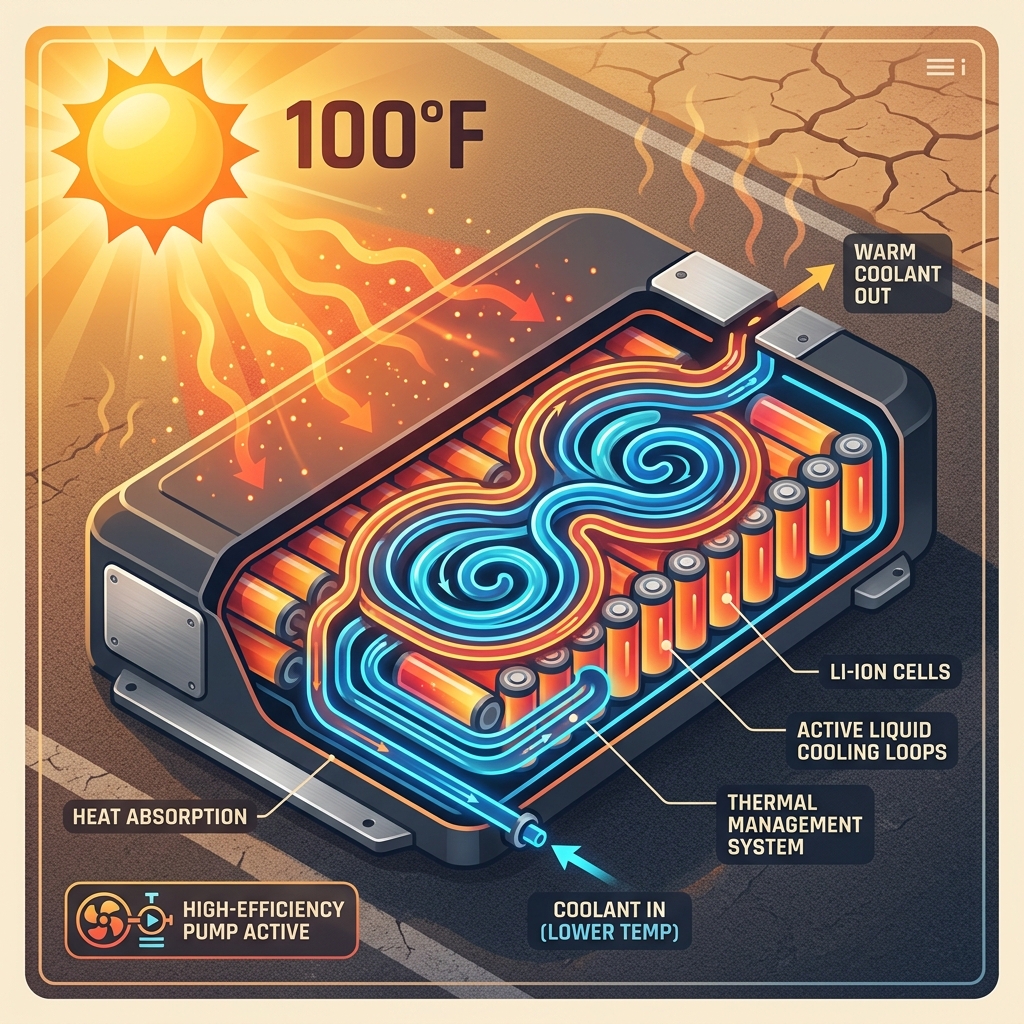
How Summer Heat Waves Degrade Lithium-ion EV Battery Lifespans
Understand how sustained temperatures above 100 degrees Fahrenheit increase battery cell degradation rates, speed up capacity loss, and impact daily range.

LFP vs. NMC Winter Performance: Why Entry-Level EVs Drop More Range in the Cold
Understand the electrochemical differences between LFP and NMC batteries, why standard range EVs experience steeper winter range drops, and cold weather optimization.
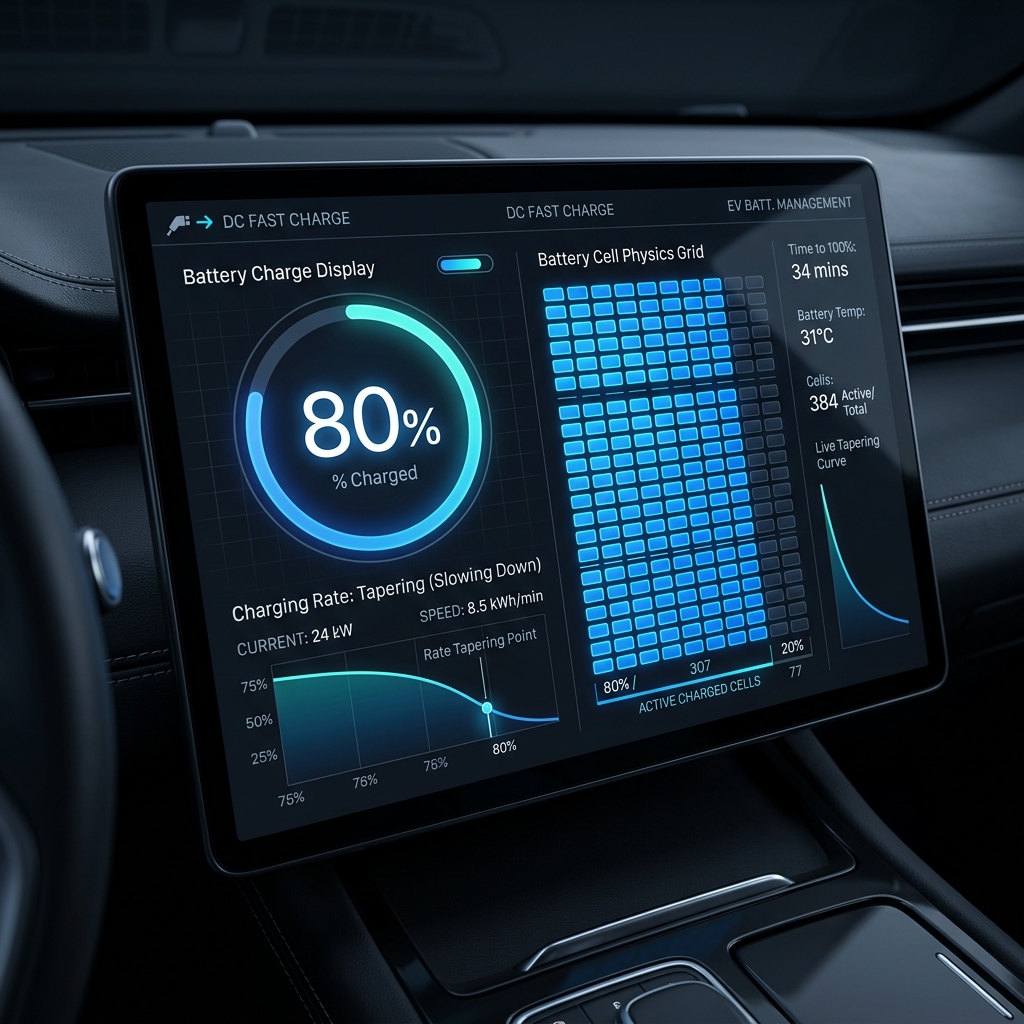
The 80% Fast-Charging Rule Explained: Why Charging Past 80% Is a Waste of Time
Understand the physics of EV charging curves. Learn why charging speeds drop dramatically after 80% state of charge and how to optimize road trip stops.