LFP vs. NMC Winter Performance: Why Entry-Level EVs Drop More Range in the Cold
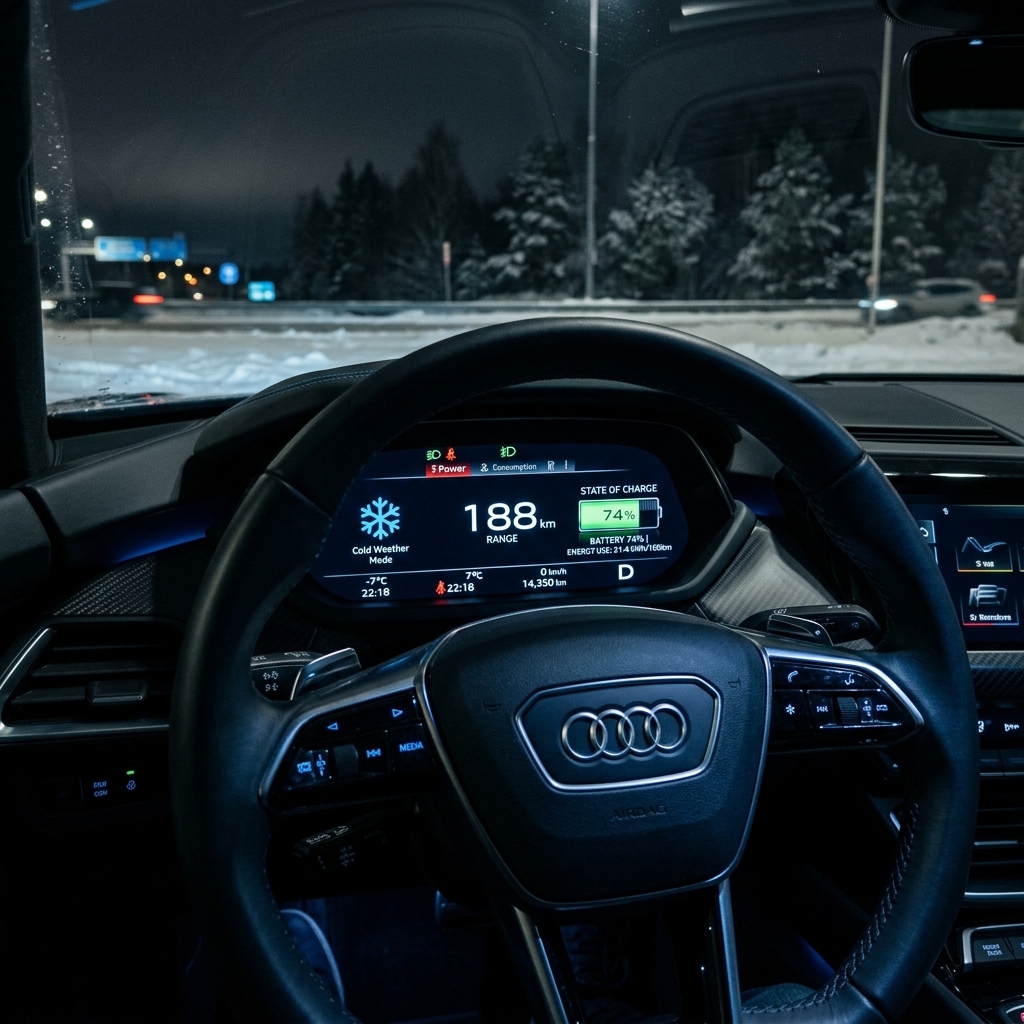
Electric vehicle buyers are increasingly choosing between two dominant lithium-ion chemistries: Lithium Iron Phosphate (LFP), typically used in standard-range, entry-level models (like the Tesla Model 3 RWD), and Nickel Manganese Cobalt (NMC), found in long-range and premium trims.
While both chemistries suffer temporary range degradation in freezing temperatures, they react differently due to their internal electrochemistry. This guide breaks down the science of LFP vs. NMC winter range loss.
The Chemistry: Why LFP Struggles More in the Cold
In freezing temperatures, chemical reactions inside all battery cells slow down because the liquid electrolyte becomes more viscous, impeding the movement of lithium ions between the anode and cathode. However, LFP cells experience a more severe drop in performance due to:
- Higher Charge Transfer Resistance: LFP cathode material naturally has higher internal resistance at low temperatures, making it harder for ions to exit the electrode.
- Lower Voltage Thresholds: LFP batteries operate at a lower average cell voltage (~3.2V) compared to NMC (~3.7V). In the cold, voltage sag drops the LFP cell closer to its low-voltage cutoff point earlier, forcing the Battery Management System (BMS) to artificially limit power delivery to protect the cell.
On average, an NMC battery pack will lose 20% to 25% of its range at 20°F (-7°C), while an unconditioned LFP pack can lose 30% to 35% of its nominal highway range.
Slower Charging Speeds in the Cold
Cold temperatures also make batteries vulnerable to lithium plating—where lithium ions accumulate as metallic lithium on the anode surface during fast charging rather than inserting into the graphite layers. To prevent this permanent damage, the BMS limits DC fast charge speeds in winter.
Because LFP cells heat up more slowly under charging resistance and have lower tolerance for cold fast charging, they require longer and more proactive pre-conditioning periods (using predictive navigation heating) to accept high amperage.
Related Guides
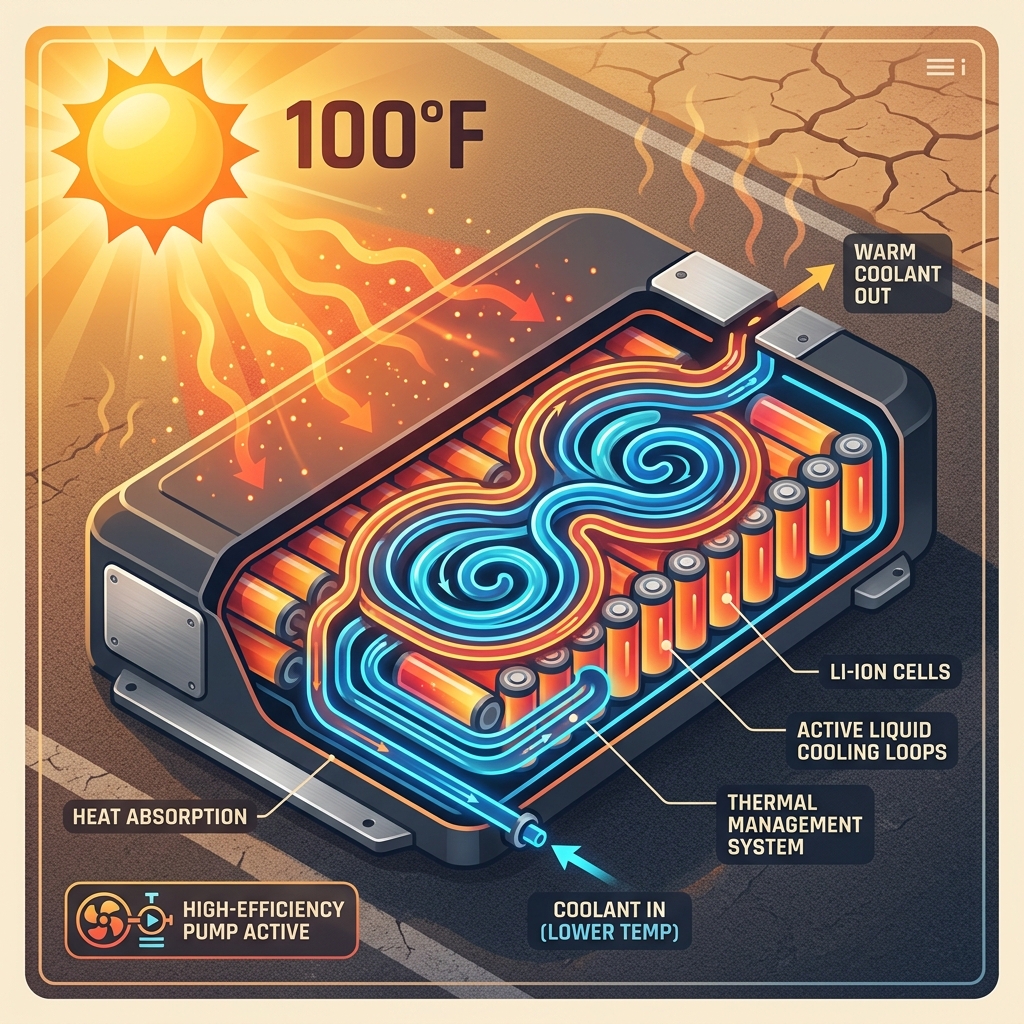
How Summer Heat Waves Degrade Lithium-ion EV Battery Lifespans
Understand how sustained temperatures above 100 degrees Fahrenheit increase battery cell degradation rates, speed up capacity loss, and impact daily range.
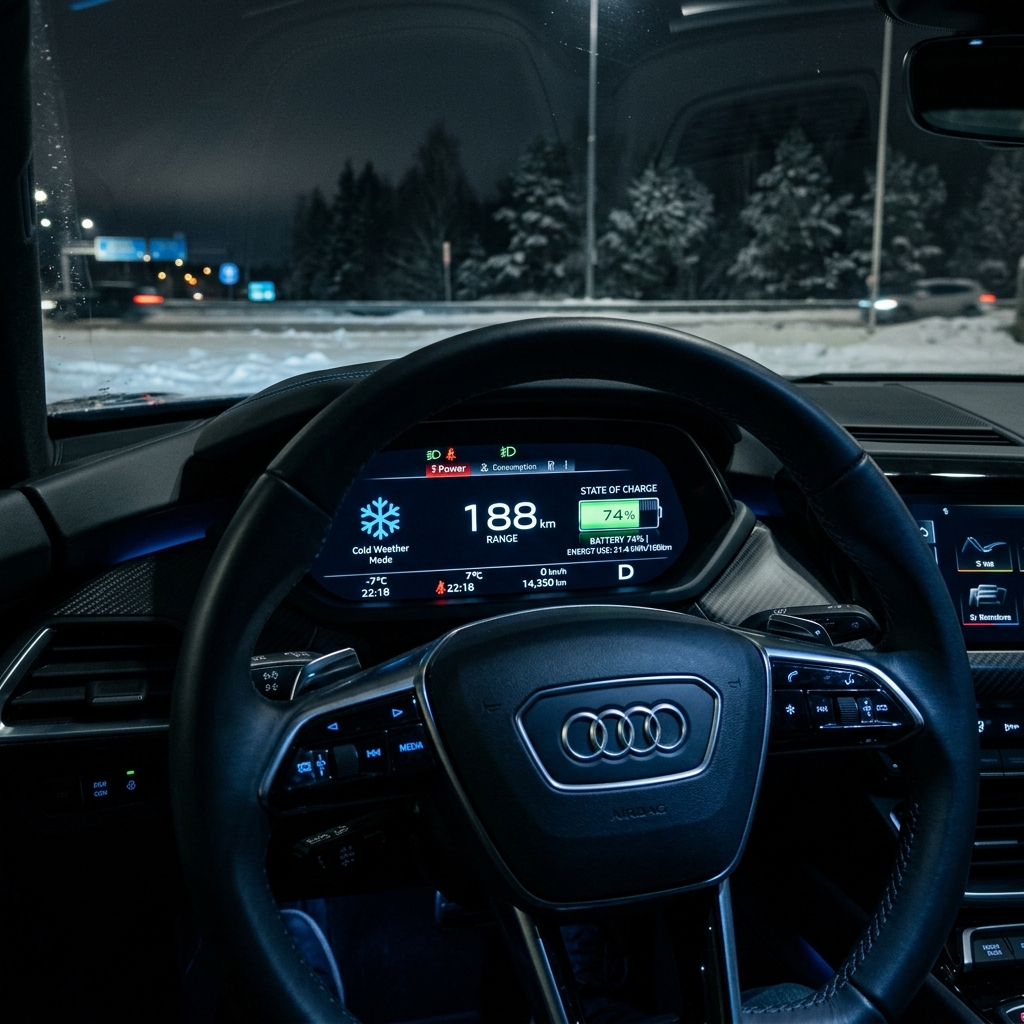
Why You Should Charge LFP Batteries to 100% Weekly (And Why It Ruins NMC Packs)
Discover the electrochemical reasons why LFP batteries thrive when charged to 100% weekly to calibrate SoC sensors, while NMC packs experience accelerated degradation.
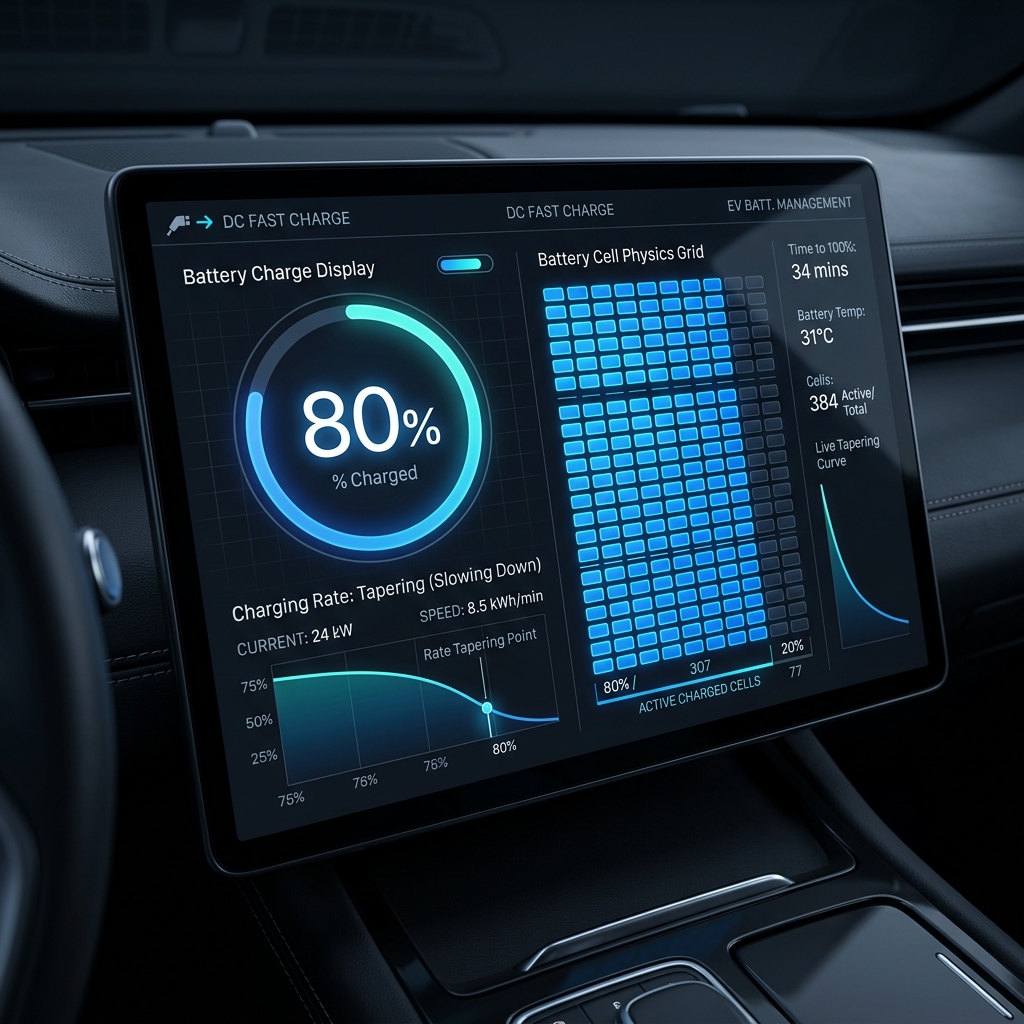
The 80% Fast-Charging Rule Explained: Why Charging Past 80% Is a Waste of Time
Understand the physics of EV charging curves. Learn why charging speeds drop dramatically after 80% state of charge and how to optimize road trip stops.